
Exploring International Accounting Standards: IFRS vs. GAAP

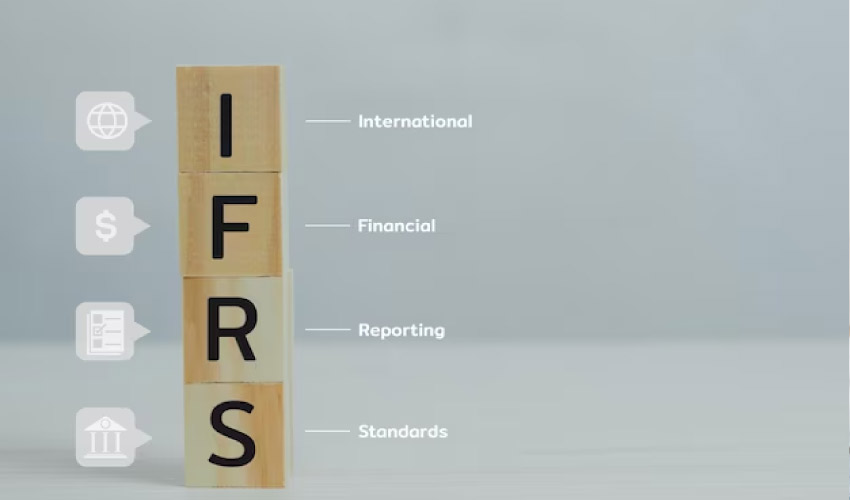
In today’s interconnected global economy, accurate and transparent financial reporting is essential for businesses operating across borders. International accounting standards provide a framework that facilitates consistent and comparable financial reporting practices worldwide. Two of the most prominent sets of accounting standards are the International Financial Reporting Standards (IFRS) and the Generally Accepted Accounting Principles (GAAP). In this blog post, we will delve into the key differences between IFRS and GAAP, their significance, and their impact on businesses.
1. IFRS and GAAP:
An Overview
IFRS:
Developed by the International Accounting Standards Board (IASB), IFRS is a set of accounting standards used by companies in many countries around the world. It aims to create a common language for financial reporting, making it easier for investors and stakeholders to understand and compare financial statements across different jurisdictions.
GAAP:
GAAP represents the Generally Accepted Accounting Principles followed in the United States. These principles are established by the Financial Accounting Standards Board (FASB) and provide guidelines for financial reporting that are specific to the U.S. market.
2. Key Differences between IFRS and GAAPScope: IFRS is used by more than 120 countries globally, making it widely adopted in international markets. GAAP, on the other hand, is specific to the United States.
Standards Setting: IFRS is governed by the IASB, an independent international body. GAAP is governed by the FASB, which operates within the U.S.
Inventory Valuation: IFRS allows inventory to be valued using either the first-in, first-out (FIFO) or weighted average cost method. GAAP primarily uses the FIFO method for inventory valuation.
LIFO (Last-In, First-Out) Method: While IFRS doesn’t prohibit the use of LIFO, GAAP allows businesses to use the LIFO method for inventory valuation, which is not allowed under IFRS.
Research and Development Costs: Under IFRS, research costs are expensed immediately, while development costs may be capitalized under specific conditions. GAAP allows capitalization of both research and development costs under certain circumstances.
Lease Accounting: IFRS introduced the IFRS 16 standard, which changes the accounting treatment for leases. GAAP has a separate standard, ASC 842, which also addresses lease accounting.
3. Significance for Businesses
Cross-Border Transactions: For companies engaged in international transactions, IFRS provides a standardized reporting framework that facilitates clear communication with stakeholders in different countries.
Investor Comparability: Businesses using IFRS enable investors to compare financial information across borders more easily, enhancing transparency and informed decision-making.
Cost and Complexity: Adapting financial reporting systems to IFRS or GAAP can involve costs for training, software, and adjustments to internal processes. Companies expanding globally need to weigh these costs against the benefits of standardized reporting.
Regulatory Compliance: Companies listed on stock exchanges in countries that require the use of IFRS must comply with these standards. Similarly, companies listed in the U.S. adhere to GAAP.
4. Harmonization Efforts In recent years, there have been efforts to converge IFRS and GAAP to reduce differences between the two sets of standards. This harmonization aims to create a more unified global reporting framework and make financial reporting across different markets more comparable.
Conclusion
The choice between IFRS and GAAP depends on a company’s geographical scope, regulatory requirements, and business objectives. Understanding the differences between these two sets of accounting standards is essential for businesses aiming to provide accurate and transparent financial reporting to stakeholders across borders. As the global economy continues to evolve, businesses should stay informed about changes and developments in both IFRS and GAAP to ensure compliance and effective financial communication.