Startup Financial Due Diligence in 2026: What Investors Check Before Funding
Raising funding is often presented as a numbers game: build a strong pitch deck, demonstrate market potential and convince investors to write a cheque.
In reality, getting a term sheet is only part of the fundraising process.
Before capital is transferred, investors and their advisors typically conduct due diligence to verify whether the company’s financial, legal, tax, ownership and operational information matches what founders have presented.
This has become particularly important in India’s startup ecosystem. EY-IVCA reported US$20.5 billion of PE/VC investment across 604 deals in the first half of 2026, while August alone recorded US$5.7 billion of PE/VC investments.
At the same time, investor scrutiny around governance and financial integrity has increased. For founders, this means financial readiness is no longer something to fix after receiving a term sheet—it should be built before fundraising begins.
So, what exactly do investors check?
What Is Startup Financial Due Diligence?
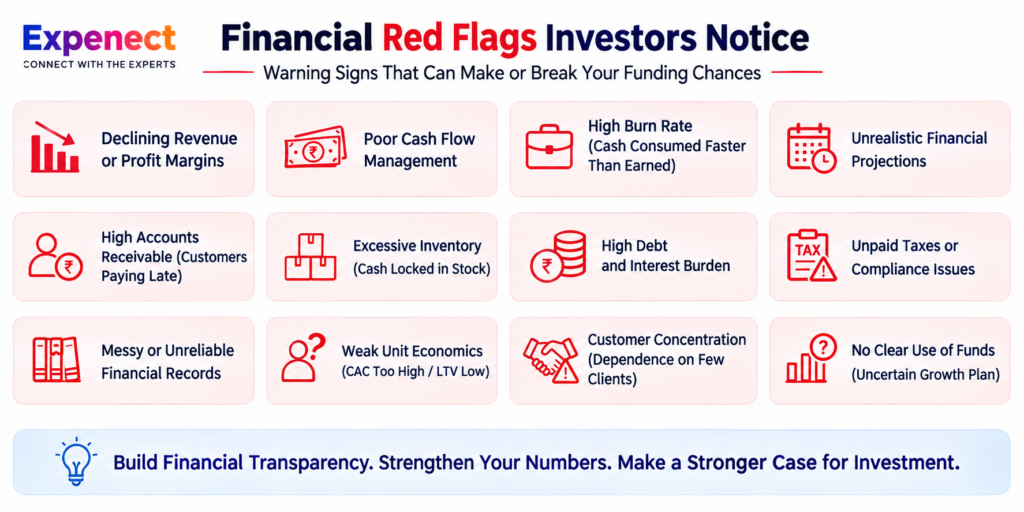
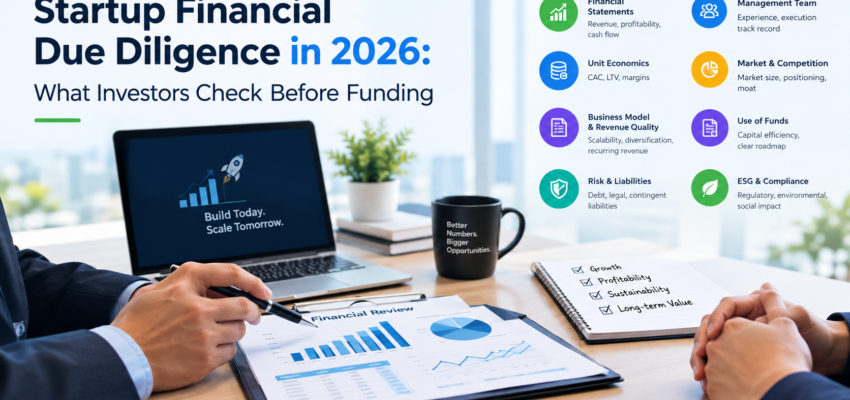
Financial due diligence (FDD) is the process of independently examining a startup’s financial information to determine whether its reported performance, financial position and projections are reliable.
Investors typically look at:
- Historical financial statements
- Revenue and revenue recognition
- Gross margins
- Expenses
- Cash flow
- Burn rate
- Runway
- Working capital
- Debt
- Customer concentration
- Financial projections
- Tax liabilities
- Bank statements
- Accounting records
- Key business metrics
However, modern startup due diligence goes beyond finance.
A comprehensive review can also cover legal, tax, corporate/ROC, regulatory, intellectual property, human resources, contracts, cap table and founder-related matters. The Startup India financial due-diligence checklist itself asks for business-model information, revenue streams, customer details, products, margins and key vendors.
1. Investors Check Whether Revenue Is Real
Revenue is usually one of the first areas investors investigate.
They want to know:
Is the reported revenue actually generated from genuine customers and sustainable business activity?
Investors may compare:
- Sales ledger
- Invoices
- Bank statements
- GST returns
- Customer contracts
- Payment receipts
- Revenue-recognition policies
- CRM data
- Subscription data
For SaaS startups, investors may examine MRR, ARR, churn and customer retention.
For marketplaces, they may examine GMV, take rate and net revenue.
For D2C businesses, they may look at orders, returns, discounts, contribution margins and repeat purchases.
The numbers presented in the pitch deck should ultimately reconcile with the accounting records.
2. Investors Examine Gross Margin and Unit Economics
Growing revenue is not enough.
An investor wants to understand whether the company can eventually generate attractive economics.
Important metrics can include:
Gross Margin = (Revenue − Cost of Goods Sold) ÷ Revenue × 100
Depending on the business model, investors may also examine:
- Customer Acquisition Cost (CAC)
- Customer Lifetime Value (LTV)
- Average Revenue Per User (ARPU)
- Contribution margin
- Payback period
- Churn
- Retention
- Repeat purchase rate
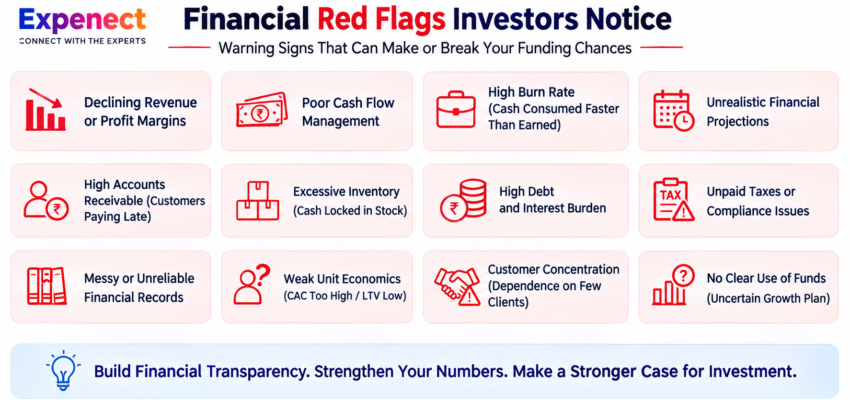
A startup showing rapid revenue growth but deteriorating unit economics may attract significantly more scrutiny.
3. Cash Burn and Runway Matter
Investors want to know where the company’s money is going.
Two critical metrics are:
Monthly Burn = Monthly Cash Outflows − Monthly Cash Inflows
and
Runway = Available Cash ÷ Monthly Net Burn
For example, if a startup has ₹1.2 crore in available cash and its average monthly net burn is ₹10 lakh:
Runway = ₹1.2 crore ÷ ₹10 lakh = 12 months
Investors will then ask whether the company can reach its next major milestone before the cash runs out.
4. Bank Statements Are Compared With the Books
A startup’s accounting records should tell the same story as its bank accounts.
Investors may request:
- Operating-account statements
- Current accounts
- Loan accounts
- Investment accounts
- Payment-gateway statements
- Foreign bank accounts, where applicable
They may compare bank receipts with reported revenue and investigate unexplained transfers, unusual expenses or large related-party transactions.
This is one reason startups should avoid mixing personal and business expenses.
5. The Cap Table Is Examined in Detail
The capitalisation table (cap table) tells investors who owns the company and how ownership changes after the new investment.
Investors may verify:
- Founder ownership
- Previous investors
- Share allotments
- Share transfers
- ESOP pool
- Convertible instruments
- Preference shares
- Warrants or other rights
- Historical funding rounds
The cap table should reconcile with the company’s statutory records and corporate filings.
A discrepancy between the spreadsheet shown to an investor and the underlying corporate records can delay a transaction.
Indian startup due-diligence guidance commonly highlights reconciliation between the cap table, allotment filings, share certificates, board/shareholder resolutions and the register of members.
6. Investors Check Debt and Hidden Liabilities
Investors don’t only look at equity.
They want to know whether the startup has:
- Bank loans
- Working-capital facilities
- Founder loans
- Convertible notes
- Outstanding vendor payments
- Guarantees
- Leases
- Contingent liabilities
- Litigation-related exposure
A company with apparently strong cash reserves can look very different once outstanding obligations are considered.
Prepare a clear debt schedule showing lender, principal, interest rate, maturity, outstanding amount and security/guarantees.
7. GST, TDS and Income Tax Compliance Is Reviewed
Tax compliance is an important part of financial due diligence.
Investors may request evidence relating to:
- Income-tax returns
- GST returns
- TDS returns
- Tax payments
- GST reconciliations
- Outstanding tax demands
- Notices
- Assessments
- Statutory dues
A startup should be able to explain any unpaid or disputed tax amount.
For an Indian startup, financial statements that look clean while GST or TDS records contain unresolved issues can create an avoidable diligence problem.
8. Investors Examine Financial Projections
Your financial model needs more than attractive numbers.
Investors may ask:
Why will revenue grow 100% next year?
What supports the expected customer acquisition?
Why will margins improve?
What happens if growth is 30% instead of 100%?
How much funding is required to reach profitability or the next milestone?
A strong model should include:
- Revenue assumptions
- Customer assumptions
- Pricing
- Gross margins
- Employee costs
- Marketing expenditure
- Technology costs
- Working capital
- Capex
- Cash burn
- Funding requirement
- Base case
- Downside case
- Upside case
The Startup India FDD checklist recommends detailed historical information and financial projections supported by underlying assumptions.
9. Customer Concentration Is a Major Risk
Imagine a startup generating ₹10 crore in revenue, but ₹6 crore comes from one customer.
The headline revenue looks impressive.
The underlying risk is much higher.
Investors therefore examine:
- Top 5 customers
- Top 10 customers
- Revenue concentration
- Contract duration
- Renewal rates
- Customer churn
- Customer acquisition sources
The Startup India FDD checklist specifically asks for large customers and their product-usage patterns.
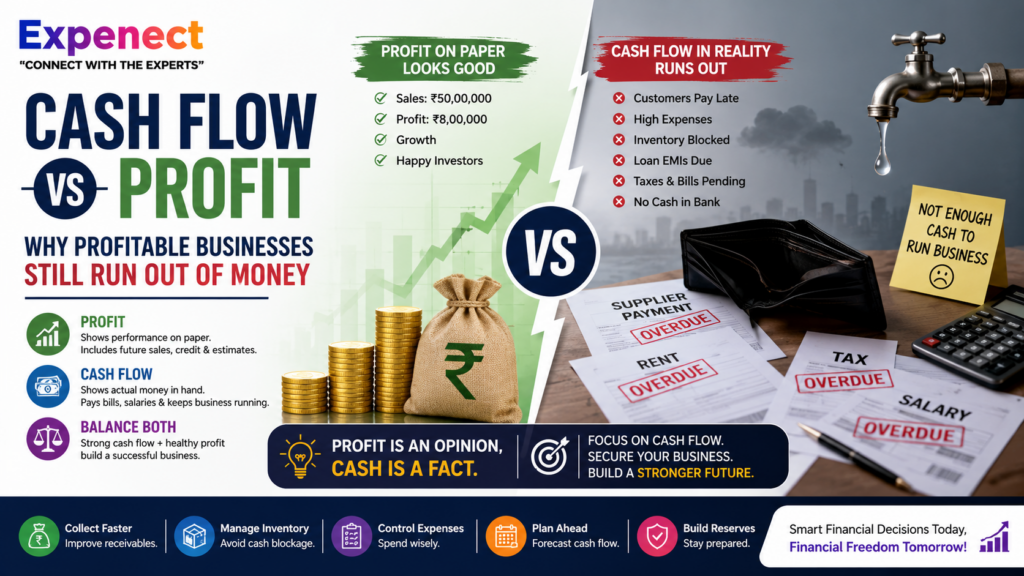
10. Working Capital and Receivables Are Checked
Revenue does not necessarily mean cash.
Investors examine:
- Accounts receivable
- Accounts payable
- Inventory
- Collection period
- Customer advances
- Working-capital requirements
- Cash-conversion cycle
A startup reporting ₹5 crore in annual sales but carrying ₹2 crore of overdue receivables may have a very different financial profile from what its revenue suggests.
11. Investors Review Related-Party Transactions
Founders sometimes operate several businesses or have family members involved in the company.
Investors may therefore examine transactions involving:
- Founder-owned companies
- Family businesses
- Directors
- Promoters
- Related vendors
- Related customers
- Founder loans
- Shared employees
- Shared office or infrastructure
These transactions aren’t automatically problematic.
The important issue is whether they are properly disclosed, documented and commercially reasonable.
12. Legal Ownership and Intellectual Property Matter
Investors need confidence that the startup actually owns the assets that create its value.
This can include:
- Trademarks
- Patents
- Copyright
- Software code
- Domains
- Databases
- Proprietary technology
- Product designs
- Brand assets
Founder and employee agreements should clearly address intellectual-property ownership and assignment.
If the company’s core technology was developed by a founder or contractor but ownership was never properly assigned to the company, the issue can become significant during diligence.
13. Corporate and ROC Compliance Is Checked
For an Indian company, investors may review:
- Certificate of Incorporation
- MOA and AOA
- MCA filings
- Board resolutions
- Shareholder resolutions
- Statutory registers
- Share allotments
- Share transfers
- ESOP approvals
- Director records
- Charges
- Previous investment documents
A clean cap table alone is not enough if the supporting corporate records do not match.
14. Founder and Employee Matters Are Also Important
Investors are backing the team—not just the spreadsheet.
They may examine:
- Founder agreements
- Founder vesting
- Employment agreements
- ESOP documentation
- Key employee retention
- Consultant contracts
- Employee disputes
- PF/ESI compliance where applicable
- Confidentiality agreements
- IP assignment
This becomes particularly important when a startup depends heavily on a small number of founders or technical employees.
15. Investors Look for Consistency Across the Entire Business
This is perhaps the most important point.
Investors don’t examine financials in isolation.
They compare the story across multiple sources.
For example:
Pitch Deck → Financial Model → Accounting Books → Bank Statements → GST → Contracts → CRM → Cap Table
If these tell substantially different stories, questions will follow.
A well-prepared startup should be able to explain how its operating metrics flow into its financial statements.
Startup Investor Due-Diligence Checklist
Before approaching investors, founders should prepare a structured data room containing:
Financial
- Audited financial statements
- Management accounts
- Bank statements
- Revenue reports
- Expense reports
- Cash-flow statements
- Financial projections
- Debt schedule
- Working-capital analysis
Tax
- Income-tax returns
- GST returns
- TDS returns
- Tax-payment records
- Outstanding demands
- Tax notices
Corporate
- Incorporation documents
- MOA/AOA
- MCA filings
- Board minutes
- Shareholder resolutions
- Statutory registers
Ownership
- Current cap table
- Historical cap tables
- Share certificates
- Allotment records
- ESOP documentation
- Convertible instruments
Legal & IP
- Customer contracts
- Vendor contracts
- Founder agreements
- Employment agreements
- IP registrations
- IP assignment agreements
- Litigation details
Business
- Customer list
- Revenue by customer
- Product information
- Pricing
- Unit economics
- CAC
- LTV
- Churn
- MRR/ARR where relevant
How Founders Can Prepare 30 Days Before Fundraising
Week 1: Reconcile accounting records, bank statements and revenue.
Week 2: Clean the cap table and verify MCA/corporate records.
Week 3: Review GST, TDS, income tax, contracts, IP and employee documentation.
Week 4: Build the investor data room and run a mock due-diligence exercise.
The goal is simple:
Don’t wait for the investor to discover the problem. Find it yourself first.
Why Due Diligence Matters More in 2026
India’s investment ecosystem remains active, but investors are increasingly focused on quality, governance and sustainable business fundamentals.
EY-IVCA reported that 2026 had already become the strongest year on record for Indian PE/VC fundraising, with US$23.7 billion raised across 56 fundraises by August.
At the same time, industry commentary indicates a broader shift toward more independent financial and integrity checks rather than relying solely on founder-provided information.
For founders, this creates a simple competitive advantage:
A startup that is diligence-ready can move faster when the right investor appears.
How Expenect Can Help Startups Prepare for Funding
Preparing for investment requires more than creating a pitch deck.
A startup may need support with Financial Health Checkups, Accounting & Bookkeeping, Business Financial Strategy, Auditing & Due Diligence, Cash Flow & Working Capital Management, Compliance & Legal and Growth & Scaling.
Through Expenect, startups can connect with finance professionals who can help identify financial gaps, improve reporting and prepare the business for investor scrutiny.
Final Takeaway
Investor due diligence is not designed to catch founders out. It is designed to answer one fundamental question:
“If we invest in this company, do the numbers, ownership, legal documents and business operations support the story we were told?”
The strongest startups can answer that question with documentation—not just explanations.
Before your next funding round, make sure your financial statements, bank accounts, GST/TDS records, cap table, contracts, IP, projections and business metrics tell the same story.
Because when an investor starts asking questions, financial transparency can become one of your strongest fundraising assets.
Disclaimer: This article is for general educational purposes and is not legal, tax, accounting or investment advice. Due-diligence requirements vary by investor, funding stage, sector and transaction structure.