
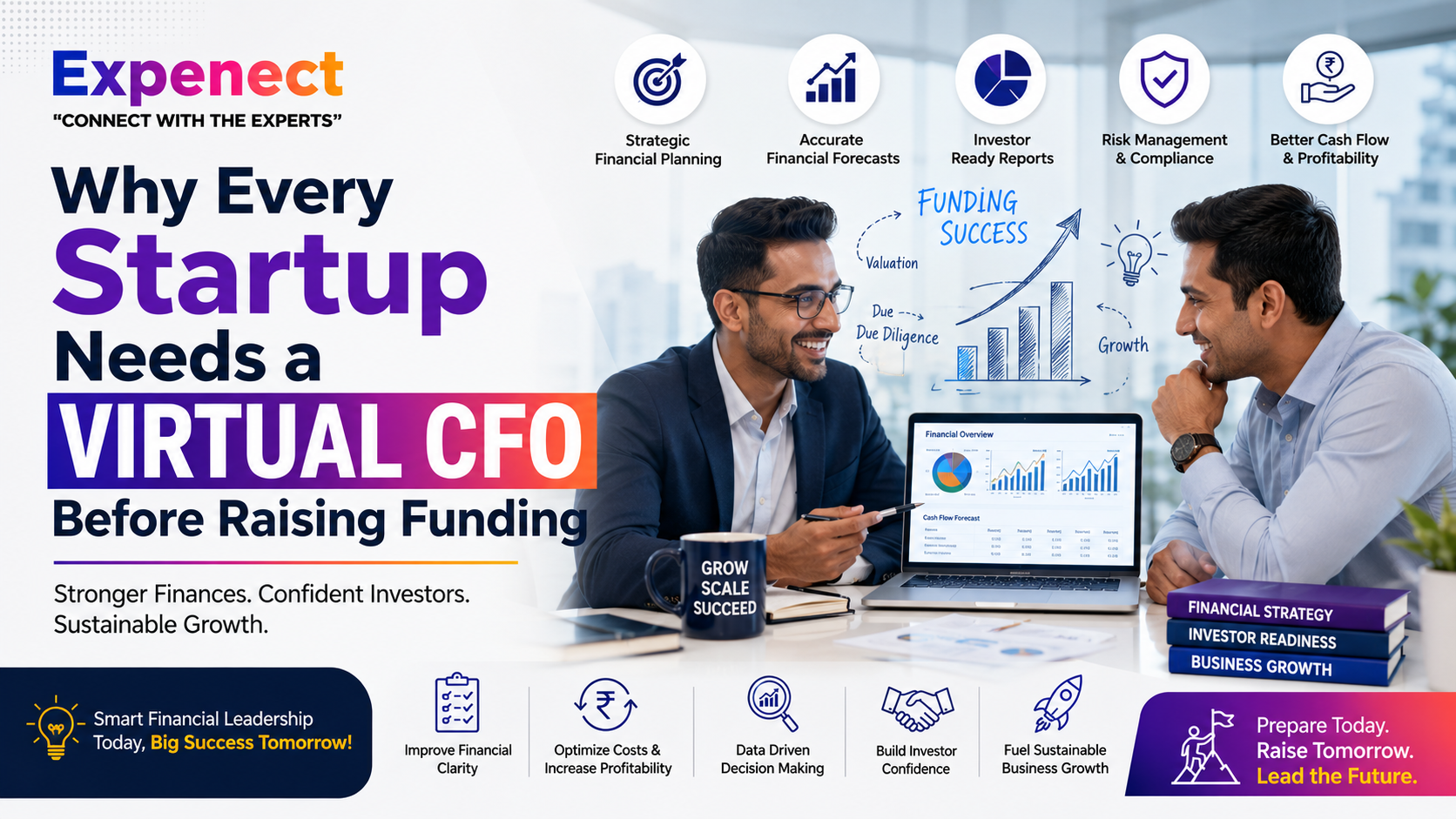
Why Every Startup Needs a Virtual CFO Before Raising Funding
Launching a startup is exciting, but turning a great idea into a successful business requires more than innovation. As your business grows, so do your financial responsibilities. When the time comes to raise funding from angel investors, venture capitalists, or banks, having a solid financial foundation becomes critical.
Many startups focus heavily on product development, customer acquisition, and marketing while overlooking one of the most important aspects of scaling a business—financial management.
This is where a Virtual CFO (Chief Financial Officer) becomes a game changer.
A Virtual CFO provides strategic financial leadership without the cost of hiring a full-time CFO. They help startups prepare for fundraising, improve financial health, manage risks, and build investor confidence.
In this guide, we’ll explain why hiring a Virtual CFO before raising funding is one of the smartest investments a startup can make.
What is a Virtual CFO?
A Virtual CFO is an experienced finance professional who works remotely or on a part-time basis to manage and guide your company’s financial strategy.
Unlike traditional accountants who primarily record transactions and file taxes, a Virtual CFO helps business owners make informed financial decisions that drive growth.
Their responsibilities include:
- Financial Planning
- Cash Flow Management
- Budgeting
- Investor Reporting
- Fundraising Support
- Financial Forecasting
- Business Valuation
- Cost Optimization
- Risk Management
- Compliance Monitoring
Think of a Virtual CFO as your company’s financial strategist.
Why Financial Planning Matters Before Fundraising
Investors don’t invest in ideas alone.
They invest in businesses that demonstrate:
- Financial discipline
- Growth potential
- Sustainable revenue
- Profitability roadmap
- Risk management
- Clear financial projections
If your financial records are disorganized, investors may lose confidence—even if your product is exceptional.
A Virtual CFO ensures your startup is investment-ready.
1. Builds Investor Confidence
Investors carefully analyze financial data before making investment decisions.
They want answers to questions like:
- How much revenue are you generating?
- What are your operating expenses?
- What is your monthly burn rate?
- How long is your runway?
- How will investment capital be utilized?
- When will the company become profitable?
A Virtual CFO prepares professional reports that answer these questions clearly.
This significantly improves investor confidence.
2. Creates Financial Projections Investors Trust
One of the first documents investors request is a financial forecast.
A Virtual CFO prepares:
- Revenue projections
- Expense forecasts
- Profit & Loss statements
- Cash Flow Forecasts
- Balance Sheet projections
- Break-even analysis
Instead of unrealistic assumptions, projections are built using market research, historical performance, and financial modeling.
3. Helps Determine the Right Valuation
One of the biggest mistakes startups make is overvaluing or undervaluing their company.
Overvaluation scares investors.
Undervaluation dilutes founders’ equity.
A Virtual CFO evaluates factors such as:
- Revenue growth
- Market opportunity
- Assets
- Customer acquisition
- Profit margins
- Comparable companies
- Future earnings potential
This helps determine a realistic valuation.
4. Manages Cash Flow Efficiently
Cash flow is often the biggest reason startups fail.
Even profitable businesses can run out of cash.
A Virtual CFO continuously monitors:
- Incoming revenue
- Operating expenses
- Vendor payments
- Payroll
- Loan obligations
- Tax liabilities
This helps founders avoid unnecessary financial stress.
5. Prepares Your Startup for Due Diligence
Before investing, investors conduct financial due diligence.
They review:
- Financial statements
- Tax returns
- Bank records
- Contracts
- Payroll
- Compliance
- Liabilities
- Intellectual Property expenses
Missing or inaccurate information can delay—or even derail—a funding round.
A Virtual CFO ensures everything is organized before investors ask.
6. Helps Control Burn Rate
Burn rate measures how quickly a startup spends its available cash.
High burn rates without corresponding growth concern investors.
A Virtual CFO identifies:
- Unnecessary expenses
- Cost-saving opportunities
- Efficient resource allocation
- Hiring priorities
Reducing burn rate extends your financial runway.
7. Creates Realistic Budgets
Many startups overspend during growth.
A Virtual CFO develops budgets for:
- Marketing
- Hiring
- Product Development
- Operations
- Technology
- Office Expenses
- Legal Costs
Budgets keep spending aligned with business objectives.
8. Improves Profitability
Growth without profitability is unsustainable.
A Virtual CFO analyzes:
- Gross Profit Margin
- Net Profit Margin
- Customer Acquisition Cost (CAC)
- Customer Lifetime Value (LTV)
- Operating Expenses
- Unit Economics
These insights help improve overall financial performance.
9. Supports Better Business Decisions
Should you:
- Hire more employees?
- Expand into a new market?
- Raise another funding round?
- Launch a new product?
- Acquire another company?
Every major business decision has financial implications.
A Virtual CFO provides data-driven recommendations.
10. Assists During Investor Meetings
Founders are experts in their products.
Virtual CFOs are experts in finance.
During fundraising discussions, they help explain:
- Financial metrics
- Revenue assumptions
- Business model
- Growth strategy
- Investment utilization
- Profitability timeline
This improves the quality of investor presentations.
11. Ensures Regulatory Compliance
Startups must comply with numerous regulations.
A Virtual CFO helps manage:
- GST
- Income Tax
- TDS
- ROC Filings
- Payroll Compliance
- Accounting Standards
- Financial Reporting
Compliance reduces legal risks.
12. Develops Financial KPIs
Investors love measurable growth.
A Virtual CFO tracks important metrics including:
- Monthly Recurring Revenue (MRR)
- Annual Recurring Revenue (ARR)
- Burn Rate
- Runway
- Gross Margin
- Net Margin
- EBITDA
- CAC
- LTV
- Churn Rate
These metrics guide better decision-making.
13. Helps Build an Investor-Ready Data Room
A professional data room includes:
- Financial Statements
- Cap Table
- Business Plan
- Customer Metrics
- Tax Records
- Compliance Certificates
- Contracts
- Intellectual Property Documents
- Forecast Models
Having everything organized speeds up funding.
14. Negotiates Better Funding Terms
Funding isn’t just about valuation.
Other terms matter too:
- Equity dilution
- Board representation
- Liquidation preferences
- ESOP allocation
- Founder rights
A Virtual CFO helps founders understand the financial implications of these terms.
15. Supports Long-Term Financial Strategy
A startup’s financial journey doesn’t end after raising capital.
A Virtual CFO helps with:
- Expansion planning
- Profitability improvement
- Future fundraising
- Mergers & acquisitions
- International expansion
- Exit strategy
They remain a long-term strategic partner.
Benefits of Hiring a Virtual CFO Instead of a Full-Time CFO
| Virtual CFO | Full-Time CFO |
|---|---|
| Lower Cost | High Salary |
| Flexible Engagement | Permanent Employee |
| Startup-Friendly | Better for Large Companies |
| Access to Experienced Professionals | Limited to One Individual |
| Scalable Services | Fixed Cost |
| Immediate Availability | Recruitment Required |
For most early-stage startups, a Virtual CFO offers significant value at a fraction of the cost.
Signs Your Startup Needs a Virtual CFO
You should consider hiring a Virtual CFO if:
- You’re planning to raise funding.
- You’re experiencing rapid growth.
- Cash flow is becoming difficult to manage.
- Investors are requesting financial reports.
- You’re unsure about business valuation.
- Your expenses are increasing quickly.
- You lack long-term financial planning.
- Financial compliance feels overwhelming.
- You’re preparing for due diligence.
- You want strategic financial guidance without hiring a full-time CFO.
Common Mistakes Startups Make Before Fundraising
Avoid these common pitfalls:
- Poor bookkeeping
- Unrealistic revenue projections
- No cash flow planning
- Mixing personal and business finances
- Ignoring compliance
- Incomplete financial statements
- Overspending
- Underestimating operational costs
- Weak financial controls
- No investor reporting framework
A Virtual CFO helps eliminate these issues before they affect your funding efforts.
How to Choose the Right Virtual CFO
Look for professionals with:
- Experience working with startups
- Strong financial modeling skills
- Fundraising expertise
- Knowledge of taxation and compliance
- Industry-specific experience
- Excellent communication skills
- Strategic business understanding
- Proven track record with investors
The right Virtual CFO acts as a trusted advisor—not just a finance manager.
Final Thoughts
Raising capital is about more than delivering a compelling pitch. Investors expect startups to demonstrate financial discipline, accurate reporting, realistic forecasts, and a clear roadmap for sustainable growth.
A Virtual CFO helps transform your startup into an investor-ready business by strengthening financial planning, improving cash flow, ensuring compliance, preparing for due diligence, and supporting strategic decision-making.
Whether you’re seeking seed funding, angel investment, venture capital, or bank financing, partnering with a Virtual CFO before fundraising can improve your credibility and increase your chances of securing investment.
Frequently Asked Questions (FAQs)
1. What does a Virtual CFO do for a startup?
A Virtual CFO provides strategic financial guidance, including budgeting, forecasting, cash flow management, investor reporting, compliance, and fundraising support.
2. Is a Virtual CFO better than an accountant?
An accountant focuses on bookkeeping, taxation, and compliance, while a Virtual CFO provides strategic financial planning and business advisory services.
3. When should a startup hire a Virtual CFO?
Ideally, before raising external funding, scaling operations, or when financial complexity begins to increase.
4. Can a Virtual CFO help with investor presentations?
Yes. A Virtual CFO prepares financial models, forecasts, valuation analysis, and investor-ready reports that strengthen fundraising presentations.
5. Is a Virtual CFO suitable for early-stage startups?
Yes. It allows startups to access senior financial expertise without the cost of employing a full-time Chief Financial Officer.