
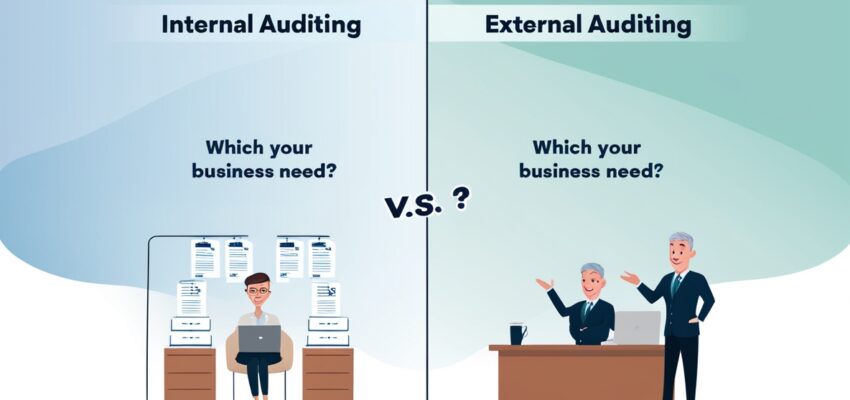
Key Differences Between Internal and External Auditing: Which Does Your Business Need?
Audits are essential for assessing the accuracy and compliance of a company’s financial practices, but not all audits serve the same purpose. Internal and external audits have distinct goals, methods, and outcomes. Understanding the differences between the two can help business owners determine which is most appropriate for their current needs. Here’s a breakdown of what each type entails and when businesses might consider each.

What is an Internal Audit?
An Internal Audit is a self-evaluation process that provides an organization with insight into its operations, financial health, and regulatory compliance. These audits are conducted by internal auditors or specialized teams within the organization.
Key Purposes of an Internal Audit:
- Risk Management: Internal audits help identify and mitigate potential risks within business operations, such as process inefficiencies, cybersecurity threats, and regulatory non-compliance.
- Process Improvement: These audits review business processes to ensure they’re running effectively and in line with company goals.
- Compliance Monitoring: Internal audits verify that the company complies with industry standards, regulatory policies, and internal protocols.
- Management Support: Internal auditors act as a support system for management, providing actionable insights for strategic planning and better decision-making.
When Should a Business Consider an Internal Audit? Internal audits are typically conducted on a routine basis, often annually or quarterly. Businesses should consider an internal audit when:
- They’re implementing new processes or systems that require oversight.
- They want to identify operational inefficiencies or areas for improvement.
- They need to ensure compliance with industry regulations and internal policies.

What is an External Audit?
An External Audit is conducted by independent, third-party auditors who evaluate a company’s financial records to ensure they are accurate and comply with accounting standards. The primary purpose of an external audit is to provide assurance to external stakeholders—like investors, creditors, and regulatory bodies—that the company’s financial statements are accurate and fair.
Key Purposes of an External Audit:
- Financial Accuracy: External audits verify that the company’s financial records are accurate and fairly represent its financial position.
- Transparency for Stakeholders: An external audit provides credibility, showing investors, lenders, and other stakeholders that the company’s finances are being managed responsibly.
- Regulatory Compliance: External auditors ensure that the company adheres to financial reporting standards and government regulations, such as GAAP or IFRS.
- Detecting Fraud: While not always their primary purpose, external audits can uncover signs of fraud or financial misconduct.
When Should a Business Consider an External Audit? External audits are typically required for publicly traded companies or companies seeking financing, but they can benefit other businesses as well. A business should consider an external audit when:
- It needs to provide verified financial information to potential investors or lenders.
- It’s preparing to go public or wants to increase its market credibility.
- It requires compliance verification for regulatory bodies or industry standards.
Key Differences Between Internal and External Audits
| Aspect | Internal Audit | External Audit |
|---|---|---|
| Conducted By | Internal auditors (employees or internal teams) | Independent third-party auditors |
| Purpose | Operational review, risk management, compliance | Financial accuracy, regulatory compliance, fraud detection |
| Focus | Processes, risk, compliance | Financial statements and accuracy |
| Frequency | Ongoing or periodic (quarterly, annually) | Typically annual |
| Reporting | Internal management | External stakeholders (investors, creditors, regulators) |
| Regulatory Requirement | Optional (except in some industries) | Mandatory for public companies |
| Cost | Typically lower, in-house | Generally higher due to external hiring |
Which Does Your Business Need?
- For Process Improvement and Risk Management: An Internal Audit is more appropriate. It helps you proactively manage risks, improve processes, and ensure compliance with internal and industry standards.
- For Credibility with External Stakeholders: An External Audit is essential if you need to provide stakeholders with an objective assurance of financial accuracy. This is often required for securing financing, attracting investors, or meeting regulatory requirements.
- For Large, Public, or Regulated Companies: Large companies or publicly traded businesses are often required to undergo both types of audits. Internal audits help with ongoing compliance, while external audits assure stakeholders of financial transparency.
- For Startups or SMEs: Small to mid-sized businesses (SMEs) or startups might start with internal audits to streamline operations and reduce risks, and only undergo external audits when seeking financing or expanding into regulated markets.
Conclusion: Choosing the Right Audit for Your Needs
Both internal and external audits play valuable roles in supporting a business’s financial health and credibility, yet they focus on different aspects. Internal audits offer an inward look, identifying areas for operational improvement, while external audits provide an independent assurance to stakeholders regarding the company’s financial integrity.
Consider the nature of your business, your goals, and your regulatory requirements when choosing which audit is right for you. An internal audit can foster internal growth and efficiency, while an external audit builds trust and credibility with external parties. Combining both, when feasible, provides a comprehensive approach to risk management, compliance, and financial health.

Tax Checkup for Startups: How to Save More on Your Taxes
Tax Checkup for Startups: How to Save More on Your Taxes
Running a startup comes with a unique set of financial challenges. Efficiently managing cash flow and minimizing tax liabilities are essential to sustain growth, and a Tax Checkup can be an invaluable tool to achieve this. Just like an annual physical checkup for your health, a tax checkup for your business helps you identify potential tax savings and ensures you’re maximizing deductions. Here’s a look at how a Tax Checkup can help startups save on taxes and the essential tips for optimizing your tax planning.
Why Startups Need a Tax Checkup
Startups are often unaware of the full range of deductions available to them or fail to take advantage of tax credits that could reduce their tax liability. A Tax Checkup can help with this by:
- Identifying Overlooked Deductions
Startups often miss out on deductions that could significantly reduce their tax liability. A tax checkup helps identify all eligible deductions, such as expenses related to research and development, employee training, or business-related travel. - Planning for Future Tax Obligations
By understanding your startup’s tax liabilities in advance, you can prepare a tax-saving strategy. This helps in making proactive decisions, like timing significant expenses to fall within the same tax year or adjusting business operations to benefit from favorable tax policies. - Avoiding Compliance Issues
Navigating tax regulations can be complicated for a new business. A tax checkup ensures that you’re meeting all compliance requirements, avoiding penalties, and positioning your startup for long-term growth. - Streamlining Cash Flow
By reducing your tax obligations, you can retain more of your income to reinvest into the business. This helps startups maintain a healthier cash flow, which is essential for scaling and managing operations effectively.
Top Tax-Saving Tips for Startups
Now, let’s dive into some actionable tax-saving tips that can help your startup make the most of a tax checkup and save on taxes.
1. Leverage Startup Costs Deductions
The initial costs of setting up a startup, such as legal fees, marketing expenses, and office setup, are deductible. Generally, the IRS allows startups to deduct up to $5,000 in startup costs and an additional $5,000 in organizational costs. Tracking and deducting these expenses can lead to significant savings in the early stages of your business.
- Pro Tip: Keep thorough records of all startup-related costs, especially in the first year, to take advantage of this deduction.
2. Utilize Research and Development (R&D) Tax Credits
If your startup focuses on innovation, the R&D Tax Credit can provide substantial tax savings. Expenses related to developing new products, software, or processes may qualify. This credit is particularly beneficial for tech and biotech startups.
- How It Helps: Qualified startups can offset a portion of their payroll tax liability by claiming the R&D Tax Credit. This helps save on payroll taxes and redirect those funds to further innovation.
3. Deduct Home Office Expenses
Many startups operate from home, especially in the initial stages. The Home Office Deduction allows you to deduct a portion of your household expenses if you use a specific area exclusively for business. This includes rent, utilities, and maintenance expenses.
- Pro Tip: To qualify, ensure that the designated area is solely used for business purposes and track related expenses carefully.
4. Write Off Business Equipment
The cost of office equipment, such as computers, furniture, and software, is deductible. Section 179 of the IRS tax code allows startups to immediately deduct the full cost of qualifying equipment in the year it’s purchased, instead of depreciating it over time.
- Example: If you purchase a $3,000 computer for your startup, you can deduct the full cost as a business expense, reducing your taxable income for that year.
5. Track Travel and Meal Expenses
If you travel for business meetings, conferences, or client visits, you can deduct travel-related expenses like airfare, lodging, and meals. For meals, the IRS typically allows a 50% deduction, making it essential to keep receipts and document the purpose of each meal for tax records.
- Pro Tip: Record the date, location, and business purpose of each travel or meal expense to substantiate your deduction if audited.
6. Benefit from Qualified Business Income (QBI) Deduction
Eligible startups organized as pass-through entities (like sole proprietorships, partnerships, or S corporations) can deduct up to 20% of their qualified business income under the QBI Deduction. This deduction can lower taxable income and maximize your startup’s earnings.
- Eligibility Note: The QBI Deduction has specific criteria based on income and business type, so consult with a tax advisor to determine your eligibility.
7. Consider Deducting Retirement Contributions
Contributing to retirement accounts, such as a SEP IRA or SIMPLE IRA, allows startup owners to save for the future while reducing taxable income. Contributions to these accounts are tax-deductible, and they also benefit employees if you choose to contribute on their behalf.
- Example: If you contribute $10,000 to a SEP IRA, you can reduce your taxable income by the same amount, lowering your overall tax burden.

Additional Strategies for Tax Planning Success
In addition to these deductions, here are some broader strategies that can help your startup maintain tax efficiency and maximize savings:
- Hire a Tax Professional: A tax expert specializing in startups can help navigate the complex tax landscape, ensuring compliance and identifying potential savings.
- Automate Expense Tracking: Use accounting software to track expenses and income regularly. This reduces errors and helps you claim every eligible deduction.
- Plan for Quarterly Tax Payments: If your startup has a steady income, plan to make quarterly tax payments to avoid penalties and manage cash flow better.
- Keep Up with Tax Law Changes: Tax policies change frequently, and staying informed ensures that your business remains compliant and can take advantage of new credits or deductions.
Final Thoughts
A Tax Checkup offers startups a proactive way to manage their tax obligations and minimize expenses. By identifying and utilizing deductions, planning for future expenses, and ensuring compliance, startups can build a solid financial foundation. These tax-saving tips, when used strategically, can reduce tax liabilities and free up funds to reinvest in business growth.
As your startup evolves, consider making tax checkups a routine part of your financial strategy. Not only does it boost financial health, but it also helps you keep your business on track for a prosperous future.

Why MSMEs Need a Business Health Checkup: A Step-by-Step Guide
Why MSMEs Need a Business Health Checkup For micro, small, and medium enterprises (MSMEs), sustaining growth and staying competitive requires more than just good products or services. A strong financial foundation and well-structured operations are equally important. But how can MSMEs assess their financial health and operational efficiency? That’s where a Business Health Checkup comes in. Much like a regular health checkup for individuals, a business health assessment helps MSMEs identify areas of strength, weaknesses, and opportunities for growth.
In this guide, we’ll explore the importance of a Business Health Checkup for MSMEs, the benefits it provides, and walk through the process step-by-step to help you understand how it can propel your business to success.
What is a Business Health Checkup?
A Business Health Checkup is a comprehensive financial and operational assessment that examines the various aspects of your business to determine its strengths and areas for improvement. It involves evaluating cash flow, profitability, compliance, internal processes, and overall financial management. For MSMEs, this checkup provides a clear picture of their current standing and future potential.

Why MSMEs Need a Business Health Checkup
Here are the top reasons why MSMEs should conduct regular business health assessments:
- Financial Clarity
Just like you need regular checkups to monitor your physical health, your business needs periodic assessments to stay financially fit. A health checkup can help MSMEs get a clear understanding of their current cash flow, revenue trends, and profitability. This ensures that business owners know exactly where their business stands financially and how they can optimize resources for better growth. - Identify Weaknesses and Risks
One of the biggest challenges MSMEs face is identifying potential risks before they become major issues. A business health checkup helps pinpoint areas where your business may be vulnerable, such as poor cash flow management, underutilized resources, or legal and compliance risks. Identifying these early gives MSMEs the chance to take corrective actions before the situation worsens. - Plan for Growth
Many MSMEs struggle to expand because they don’t have a clear roadmap for growth. A Business Health Checkup can reveal opportunities where your business can grow—whether it’s improving operational efficiency, targeting new markets, or increasing profitability. By identifying these areas, MSMEs can develop a strategic growth plan. - Improved Cash Flow Management
Cash flow is the lifeblood of any MSME. A health checkup will evaluate cash flow trends and reveal any issues related to liquidity, receivables, or payment delays. MSMEs can then take steps to improve cash flow management by optimizing payment terms, controlling expenses, and ensuring sufficient working capital. - Compliance and Legal Assurance
Many MSMEs inadvertently fall into legal and compliance issues due to a lack of oversight. A business health assessment can help ensure that your business is compliant with tax laws, labor regulations, and other legal requirements. This reduces the risk of fines or penalties, which can be particularly harmful to smaller businesses. - Boost Investor and Lender Confidence
If you’re seeking funding or loans, a solid business health report can provide the necessary confidence to investors or lenders. A transparent report outlining the financial strength and future potential of your business will showcase your readiness to manage and grow the capital received.

Step-by-Step Guide to Conducting a Business Health Checkup
Step 1: Review Your Financial Statements
The first step in any business health checkup is to analyze your financial statements, including balance sheets, profit and loss statements, and cash flow statements. This will give you insights into your business’s revenue, expenses, liabilities, and assets.
- Key Metrics to Assess: Profitability ratios, liquidity ratios, debt-to-equity ratio, and cash flow stability.
Step 2: Evaluate Cash Flow
Cash flow problems can hinder even the most successful businesses. As part of your checkup, monitor the inflow and outflow of cash to ensure that you have enough working capital to cover operational expenses.
- What to Look For: Patterns of late payments from clients, high expenses in certain areas, or declining cash reserves.
Step 3: Assess Operational Efficiency
Examine how efficiently your business runs. Are there areas where resources are underutilized, or where processes could be streamlined? Operational inefficiencies can drain time, energy, and finances from your MSME.
- What to Analyze: Employee productivity, inventory management, and supplier relationships.
Step 4: Ensure Compliance
Regularly review your business’s compliance with local, state, and federal regulations, including taxes, labor laws, and industry-specific standards.
- What to Check: Are you filing taxes on time? Are your financial reports accurate? Are you meeting labor law requirements?
Step 5: Perform a Risk Assessment
Every business faces risks, but identifying and mitigating them is key to long-term success. Conduct a risk assessment to identify financial, operational, and market risks that could impact your MSME.
- Types of Risks: Credit risks, market volatility, legal challenges, and supply chain risks.
Step 6: Set Goals for Improvement
After completing your checkup, set actionable goals for improvement. Whether it’s increasing revenue, cutting costs, or improving compliance, having clear, measurable objectives will ensure that your business stays on track.
- Examples of Goals: Increase profitability by 10% in the next quarter, reduce debt-to-equity ratio, or improve employee productivity through targeted training programs.

How a Business Health Checkup Can Help MSMEs Grow
A Business Health Checkup isn’t just about identifying issues; it’s about finding ways to unlock growth potential. By understanding where your business currently stands and setting measurable goals for improvement, you can optimize resources, avoid financial pitfalls, and position your MSME for long-term success.
Key Takeaways for Growth:
- Identify areas for cost savings: Optimize operational efficiency.
- Enhance decision-making: Use the insights from your financial health assessment to make data-driven decisions.
- Boost productivity: Streamline processes and improve resource utilization for better output.
- Improve profitability: Focus on areas that have the highest potential for profit growth.
Conclusion
For MSMEs, staying on top of financial and operational performance is essential for continued success. A Business Health Checkup offers valuable insights into the health of your business, helping you identify areas for improvement, manage risks, and seize growth opportunities. Regular assessments provide the foundation for making informed decisions that keep your business thriving.
Take control of your business’s future today by scheduling a Business Health Checkup and setting your MSME on the path to sustained growth and success!

How Mumbai’s CAs Help Small Businesses Save on Taxes
Running a small business in Mumbai comes with its own set of challenges — and managing taxes is certainly one of the biggest. Navigating the complex tax regulations, staying compliant, and finding ways to legally minimize tax liabilities can be overwhelming for many business owners. That’s where a Chartered Accountant (CA) steps in to make a significant difference.
Mumbai’s CAs possess an in-depth understanding of local tax laws and regulations, making them valuable allies for small businesses looking to optimize their financial health. Here’s a closer look at how these professionals can help your business save on taxes, grow, and thrive.

1. Strategic Tax Planning and Compliance
One of the primary ways a CA can help a small business save on taxes is through strategic tax planning. This involves analyzing your business’s financial situation, forecasting revenues, and implementing strategies to optimize tax liabilities. A skilled CA will evaluate your business’s structure, expenses, and income streams to identify potential tax-saving opportunities.
Additionally, they ensure your business remains compliant with the latest tax regulations, helping you avoid hefty penalties that arise from non-compliance. This includes timely filing of income tax returns, TDS (Tax Deducted at Source) payments, GST returns, and more.
2. Identifying Deductions and Tax Benefits
Mumbai’s CAs are well-versed in all the deductions and exemptions available under the Income Tax Act. They can help you claim deductions for business expenses such as rent, utilities, salaries, and professional fees. CAs can also guide you on how to maximize deductions under Section 80C, Section 80D, and other sections that apply to business owners.
For example, many small businesses overlook deductions on depreciation for assets or additional exemptions for startup expenses. Your CA will ensure that every eligible deduction is claimed, thus lowering your overall tax burden.
3. Optimizing GST Payments
For businesses dealing with goods and services, GST compliance is a critical component. Mumbai’s CAs provide specialized advice on optimizing GST payments. They help ensure proper invoicing, identify eligible Input Tax Credits (ITC), and assist with GST reconciliation to reduce errors and minimize payable GST. This results in smoother cash flow management and less money going out as taxes.
4. Structuring Business for Tax Efficiency
Choosing the right business structure can have a huge impact on how much tax you pay. Should you operate as a sole proprietorship, partnership, LLP, or a private limited company? CAs help evaluate which structure is the most tax-efficient for your business operations.
For instance, transitioning from a sole proprietorship to an LLP or a private limited company might offer better tax benefits, depending on your income and scale of operations. A CA will provide insights and recommendations on how to structure your business for long-term tax efficiency.
5. Assistance with Government Schemes and Tax Reliefs
Mumbai’s CAs stay updated with government policies and tax relief measures introduced to support small businesses. They can guide you through various schemes like MSME benefits, startup tax exemptions, and more. This ensures your business takes full advantage of available benefits that can lead to significant tax savings.
Additionally, CAs can advise on reliefs during challenging times, such as the COVID-19 pandemic, where the government announced various tax reliefs and deferrals. Such proactive advice ensures your business remains financially agile.
6. Managing Capital Gains and Investments
For small businesses that invest in assets, real estate, or even financial instruments, managing capital gains is crucial. Mumbai’s CAs can assist in tax-efficient investment strategies, such as reinvestment in Section 54EC bonds to save capital gains tax or investment in specified funds to reduce tax outgo.
Proper planning around capital gains ensures that your business doesn’t incur unnecessary taxes, thus preserving more of your earnings for growth and expansion.
7. Handling Tax Audits and Legal Matters
Facing a tax audit or legal scrutiny can be stressful for small business owners. A professional CA can represent your business during tax audits and help prepare a robust defense in case of disputes. With their expertise, CAs can help resolve issues and ensure the audit process goes smoothly, preventing potential fines or additional tax payments.
Conclusion
In a city like Mumbai, where businesses operate in a dynamic and competitive environment, having a Chartered Accountant is not just an option—it’s a necessity. A qualified CA brings the expertise needed to navigate the maze of tax laws and regulations, making it easier for small businesses to stay compliant while saving on taxes.
At Expenect, we connect you with some of the most trusted and verified Chartered Accountants in Mumbai. Whether you need help with tax planning, GST optimization, or business restructuring, our experienced CAs are here to provide you with the best financial guidance. Get in touch with a local CA through Expenect today and take the first step towards smarter tax savings for your business!

How to Verify the Credentials of a Chartered Accountant in Mumbai
When it comes to choosing a Chartered Accountant (CA) in Mumbai, trust is paramount. Whether you’re looking for assistance with tax filings, GST compliance, financial planning, or business auditing, you need to be certain that the CA you hire has the right qualifications and experience. The process of verification might seem daunting, but it’s essential to ensure that you are working with a professional who will manage your finances with integrity and expertise.
At Expenect, we understand the importance of credibility, which is why we have multiple verified CAs you can trust. Here’s how you can independently verify the credentials of a Chartered Accountant in Mumbai:
1. Check for ICAI Membership
All Chartered Accountants in India are required to be members of the Institute of Chartered Accountants of India (ICAI). To verify their membership, ask the CA for their ICAI membership number and visit the ICAI website to cross-check the details. Enter the membership number, and you’ll get information about their registration status, qualifications, and whether they’re active members.
2. Verify Professional Experience
A CA’s professional experience is crucial, especially if you’re seeking specialized services like business restructuring, GST consultations, or forensic audits. Review their professional history, which can be obtained through client testimonials, LinkedIn profiles, or by asking for a detailed resume. Look for experience that aligns with your business needs.
3. Check Their Track Record and Reputation
Ask for references from previous clients or browse online reviews on platforms like Google My Business, social media, or professional directories. A well-regarded CA will have a strong track record of delivering quality services, and their reputation in the financial community will speak volumes about their credibility.
4. Validate Educational Qualifications
While ICAI membership assures basic qualifications, some CAs go above and beyond to pursue additional certifications and specializations. You can ask for copies of their educational certificates and verify their authenticity by contacting the issuing institution.
5. Assess Ethical Conduct and Professional Standards
Ethics and professionalism are non-negotiable when it comes to financial matters. Ensure that the CA adheres to the Code of Ethics set by ICAI. You can inquire with ICAI’s disciplinary directory to see if there are any complaints or disciplinary actions against the CA in question.
6. Look for Additional Specializations
In Mumbai’s diverse financial environment, CAs often acquire additional specializations, such as expertise in GST, business advisory, or international taxation. These additional qualifications can be verified through the ICAI’s specialized wings or other relevant professional bodies. A CA with specialized skills can provide tailored services that meet your business’s unique requirements.
7. Verify Registration with Local Associations
Many CAs in Mumbai are also members of local professional bodies, such as the Mumbai Chartered Accountants Society (MCAS) or the Bombay Chartered Accountants Society (BCAS). Registration with these associations indicates active participation in the professional community and continuous learning.
8. Confirm Their Licensing for Practicing Audits
If you need a CA for audit services, ensure they hold a Certificate of Practice (COP) issued by ICAI. Without a valid COP, a CA cannot sign audit reports or represent you in legal or tax matters. You can confirm the validity of the COP on the ICAI’s website.
9. Meet in Person or Schedule a Video Consultation
An in-person or video consultation will give you a chance to gauge the CA’s communication skills, professionalism, and approach to your financial needs. Use this opportunity to discuss your requirements in detail, ask relevant questions, and determine if they are the right fit for your business.
10. Partner with a Verified CA on Expenect
At Expenect, we do the legwork for you by listing only verified Chartered Accountants in Mumbai. Each CA undergoes a stringent vetting process to ensure they meet our standards of excellence and trustworthiness. With us, you can skip the hassle of verification and choose from our pool of qualified and experienced CAs with confidence.
Conclusion
Verifying the credentials of a CA in Mumbai might seem like a tedious process, but it’s essential to ensure that you’re partnering with a professional who can handle your financial matters with precision and integrity. Whether you’re a business owner or an individual seeking tax assistance, the right CA can make a significant difference in your financial success.
With Expenect, you have access to multiple verified CAs in Mumbai, each vetted and trusted for their expertise and ethical conduct. Find the perfect Chartered Accountant for your needs today and ensure your financial matters are in safe hands!

Top Reasons to Hire a Local Chartered Accountant (CA) in Mumbai for GST Compliance
Here are the Top 10 Reasons to Hire a Local Chartered Accountant (CA) in Mumbai for GST Compliance
Navigating GST (Goods and Services Tax) compliance can be challenging, especially in a city as dynamic and fast-paced as Mumbai. Whether you’re a small business owner, a startup founder, or a large enterprise, ensuring that your GST filings are accurate and on time is crucial for staying compliant and avoiding penalties.
While you might be tempted to handle GST compliance on your own or hire a remote consultant, partnering with a local CA in Mumbai can be a game-changer. Here’s why choosing a local CA is a smart move for your business:
1. In-Depth Knowledge of Local Laws and Regulations
A local CA in Mumbai is well-versed in the city’s specific tax and financial regulations. They understand the nuances of Maharashtra’s state-specific laws and how they integrate with national GST requirements. This local expertise ensures that your business is not only compliant with GST but also with any additional regulations that may apply.
2. Quick and Easy Accessibility
When it comes to GST, there might be scenarios where immediate action is required. Having a local CA means they’re just a phone call or a short drive away. You can schedule face-to-face meetings to discuss complex issues, review documentation, and resolve urgent matters swiftly. This level of accessibility can be a lifesaver, especially during critical deadlines or when responding to GST notices.
3. Tailored Solutions for Mumbai-Based Businesses
Every business is unique, and so are its GST compliance needs. A local CA who understands the Mumbai business landscape can offer tailored solutions that suit your specific industry and business size. Whether you’re in retail, hospitality, manufacturing, or services, they can provide strategies that maximize tax benefits while ensuring full compliance.
4. Expert Handling of GST Filings and Returns
GST compliance involves various filings, including monthly, quarterly, and annual returns, along with reconciliation and record maintenance. A local CA in Mumbai can manage these filings seamlessly, ensuring accurate entries, timely submissions, and proper reconciliation. This reduces the risk of errors, missed deadlines, or penalties.
5. Assistance in GST Audits and Disputes
GST audits can be stressful, especially if you’re not fully prepared. A local CA can help you get audit-ready by ensuring that all your records are in order, providing representation during audits, and addressing any queries raised by the tax authorities. Additionally, if there’s a dispute or discrepancy, a local CA can offer quick support and guidance to resolve the issue effectively.
6. Guidance on Input Tax Credit (ITC) Optimization
Input Tax Credit (ITC) is one of the most significant advantages of the GST system, but it’s also one of the most complicated. A local CA will help you optimize your ITC claims by analyzing your business transactions and ensuring that you’re not missing out on any potential credits. This helps reduce your overall GST liability, keeping more cash flow within your business.
7. Strategic Advice for Business Growth
CAs are not just tax experts—they’re strategic advisors. A local CA with experience in the Mumbai market can provide you with valuable insights and advice on business growth, financial planning, and expansion. They can identify GST-related opportunities and challenges unique to your industry and help you navigate them with ease.
8. Cost-Effective Compliance Management
Hiring a local CA can actually be more cost-effective in the long run. You’ll save time and resources that would otherwise be spent on understanding complex GST regulations or rectifying compliance errors. Additionally, a local CA’s network of contacts in the city can be beneficial for resolving issues quickly and efficiently.
9. Keeping Up with GST Updates and Amendments
GST laws and regulations are constantly evolving. A local CA stays up-to-date with the latest amendments, notifications, and circulars, ensuring that your business remains compliant at all times. They can proactively inform you of changes that may impact your business, helping you adapt and implement necessary changes without delay.
10. Strong Network and Professional Connections
Being based in Mumbai, a local CA has a strong professional network, including relationships with tax officers, consultants, and other professionals in the city. This network can be highly advantageous in resolving disputes, seeking clarifications, or handling unexpected GST issues that may arise.
Conclusion
When it comes to GST compliance, having a local CA in Mumbai by your side is more than just a convenience—it’s a strategic advantage. Their in-depth knowledge of local laws, accessibility, tailored solutions, and hands-on support make them an invaluable asset to your business. So, if you want to streamline your GST compliance and focus on what you do best—growing your business—partnering with a local CA is the way to go!

How to Choose the Best Chartered Accountant (CA) in Mumbai for Your Business
Running a business is no easy task, especially in a bustling city like Mumbai, where financial regulations and tax laws can feel like a maze. That’s where a Chartered Accountant (CA) comes in. A good CA is not just a number-cruncher; they’re a trusted advisor who can guide your business through financial challenges, compliance, and tax planning, helping you save time, money, and stress.
But with so many CAs in Mumbai, how do you choose the right one? Here’s a guide to help you make that decision.
1. Understand Your Business Needs
Before you start searching for a CA, take a step back and assess your business needs. Are you a startup looking for help with company registration? Do you need tax planning and compliance support? Or maybe you’re seeking advice on financial structuring or fundraising. Different CAs specialize in different areas, so understanding what you need will help you find a CA who’s the right fit.
2. Look for Industry-Specific Experience
Not all businesses are the same, and not all CAs are experts in every field. Whether you’re in retail, tech, manufacturing, or services, finding a CA with experience in your industry can make a huge difference. They’ll be familiar with the specific regulations, challenges, and opportunities your business faces. For instance, if you run a tech startup, a CA who has worked with similar companies will be better equipped to help you navigate tax breaks or incentives.
3. Check Their Credentials
In a city like Mumbai, it’s crucial to ensure your CA is properly qualified and registered with the Institute of Chartered Accountants of India (ICAI). While that might seem like a given, it’s worth double-checking. Look for additional certifications or specializations, such as expertise in GST, international taxation, or business valuations, if that’s relevant to your business.
4. Reputation and Recommendations Matter
When it comes to choosing a CA, word-of-mouth can be incredibly powerful. Ask other business owners or colleagues if they can recommend someone. You can also check online reviews and testimonials. A CA with a solid reputation is more likely to be reliable, trustworthy, and experienced.
5. Availability and Accessibility
One common mistake businesses make is choosing a CA who is too busy or hard to reach. You want a CA who is available when you need them, especially during tax filing season or when urgent financial decisions arise. Make sure to discuss their availability upfront and understand how they prefer to communicate—whether it’s email, phone calls, or face-to-face meetings.
6. Transparency on Fees
Cost is always a consideration, but don’t let it be the only factor. While it’s important to stay within budget, the cheapest CA may not always provide the best value. A skilled CA can save you far more in taxes and penalties than you’d spend on their services. Make sure to discuss fees upfront and clarify whether they charge a flat fee, hourly rate, or based on the complexity of the work.
7. Technology and Digital Savviness
In today’s fast-paced digital world, it’s essential to have a CA who is tech-savvy. From cloud accounting software to digital tax filing, the right CA should be able to leverage technology to make your financial processes smoother and more efficient. If your business operates online or relies heavily on technology, this becomes even more critical.
8. Chemistry and Communication
Last but not least, it’s important that you feel comfortable with your CA. You’ll be discussing sensitive financial information with them, so trust and clear communication are key. When you meet with potential CAs, assess how well they listen to your concerns, explain things clearly, and provide actionable advice. The right CA will feel like a partner who’s genuinely invested in your business’s success.
Conclusion
Choosing the best CA for your business in Mumbai is about more than just finding someone with the right qualifications. It’s about finding a trusted advisor who understands your business, communicates effectively, and can help you navigate the financial complexities that come with running a business. Take your time, do your research, and choose a CA who will be a long-term asset to your company.
In a city like Mumbai, where every decision counts, having the right CA can be the difference between thriving and just surviving.

Top Chartered Accountants in Mumbai for Business Setup & Tax Planning
Starting a business in Mumbai is exciting but can be overwhelming, especially when it comes to managing finances and taxes. That’s where a trusted Chartered Accountant (CA) comes into play. Whether you’re a startup or an established business, having a knowledgeable CA by your side can make all the difference in navigating the complex world of tax planning and business compliance.
Mumbai, being the financial capital of India, has a vast pool of highly skilled CAs who specialize in helping businesses of all sizes. But how do you choose the right one?
Why You Need a CA for Your Business Setup
When starting a business, there are a ton of legal and financial formalities to take care of. From registering your company to setting up proper accounting systems, the process can be confusing. A CA will not only guide you through the registration process but also ensure that your business complies with all necessary regulations.
Key services provided by top CAs in Mumbai for business setup:
- Company registration (Private Limited, LLP, Partnership, etc.)
- Compliance management (ROC filings, tax registrations)
- Financial structuring (deciding on capital requirements, loans, investments)
- GST and tax registration (for hassle-free tax management)
The Importance of Tax Planning for Growing Businesses
Tax planning is critical to the success of any business. Without a proper tax strategy, you could be overpaying or worse, underpaying and facing penalties. Top CAs in Mumbai offer expert advice on how to optimize your taxes legally, allowing you to save money while staying compliant with all tax laws.
A well-thought-out tax plan can help in:
- Reducing your tax liability
- Maximizing available deductions
- Streamlining your accounting and financial reporting processes
How to Find the Best CA in Mumbai
When searching for a CA, it’s important to look for professionals with experience in your industry and who understand the specific challenges you face. Some factors to consider include:
- Reputation: Check reviews, testimonials, or even word-of-mouth recommendations.
- Experience: Find someone who has a solid track record in both business setup and tax planning.
- Specialization: If you’re in a niche industry, a CA who has worked with similar businesses can provide better guidance.
Conclusion
In a city as fast-paced and competitive as Mumbai, having the right CA can set your business up for long-term success. From ensuring compliance to creating smart tax strategies, a skilled CA will help you focus on growing your business without the financial headaches. Take your time to choose wisely—because the right CA isn’t just a service provider, they’re a long-term partner in your success.

A Day in the Life of a Chartered Accountant: Behind the Scenes
Ever wondered what it’s like to be a Chartered Accountant (CA)? The life of a CA is dynamic, challenging, and rewarding, filled with a mix of financial analysis, client interactions, problem-solving, and strategic decision-making. In this blog post, we will take you behind the scenes to experience a day in the life of a Chartered Accountant, shedding light on the tasks, responsibilities, and experiences that shape their professional journey.
Morning: Start of the Day
The morning kicks off with checking emails and reviewing the day’s agenda. CAs often begin by addressing urgent client inquiries, assessing any new financial reports, and catching up on industry news.
9:00 AM – Financial Analysis and Reporting
Analyzing financial statements is a crucial task for CAs. They dive into balance sheets, income statements, and cash flow reports, identifying trends, anomalies, and potential areas of concern. This analysis informs strategic decisions and helps clients understand their financial health.
10:30 AM – Client Meetings
Client interactions are a significant part of a CA’s day. Meetings can range from discussing tax planning strategies, addressing financial concerns, or presenting audit findings. Effective communication and the ability to simplify complex financial concepts are key in these interactions.
12:00 PM – Lunch and Networking
Lunchtime provides an opportunity to recharge and network. CAs often connect with colleagues, clients, or attend industry events to stay updated on trends and expand their professional circle.
Afternoon: Focused Tasks
1:30 PM – Audit Engagement
If involved in auditing, CAs dedicate time to reviewing audit documentation, examining internal controls, and verifying financial records. Attention to detail and thoroughness are essential to ensure accurate and reliable audit findings.
3:00 PM – Strategic Planning
For CAs engaged in advisory roles, the afternoon may involve strategizing with clients on business expansion, investment decisions, or tax optimization. They provide data-driven insights to help clients make informed choices aligned with their financial goals.
4:30 PM – Professional Development
Continual learning is a priority for CAs. The late afternoon might involve attending webinars, reading up on regulatory changes, or engaging in online courses to stay updated on industry developments.
Evening: Wrapping Up
6:00 PM – Review and Reflection
The evening is often dedicated to reviewing the day’s tasks, ensuring that deadlines have been met and client needs have been addressed. CAs take time to reflect on challenges faced and lessons learned.
7:30 PM – Planning for Tomorrow
CAs may plan for the next day’s tasks, prioritize assignments, and set objectives for meetings or projects.
8:30 PM – Personal Time
As the workday winds down, CAs enjoy personal time to relax, pursue hobbies, or spend quality time with family and friends.
Conclusion
The life of a Chartered Accountant is multifaceted, demanding a blend of technical skills, interpersonal abilities, and a commitment to professional growth. From financial analysis and reporting to client interactions and continuous learning, CAs navigate a diverse range of responsibilities.
Their work contributes significantly to the financial stability and success of businesses and individuals alike. Whether in audit, taxation, advisory, or other roles, CAs play a critical role in shaping financial decisions and guiding their clients towards prosperous outcomes.

Building a Successful Career as a Chartered Accountant: Tips and Advice

Building a Successful Career as a Chartered Accountant: Tips and Advice
A career as a Chartered Accountant (CA) offers a pathway to a dynamic and rewarding profession in the fields of accounting, finance, and business advisory.
CAs play a critical role in financial management, audit, taxation, and strategic decision-making for businesses of all sizes.
If you’re considering a career as a CA, this blog post provides valuable tips and advice to help you navigate the journey and build a successful and fulfilling career.
1. Understand the CA Qualification Pathway
The path to becoming a CA involves a combination of academic studies, practical training, and passing the CA exams. Research and understand the specific requirements and steps involved in your country’s CA qualification process.
2. Choose the Right Educational Path
Select an accredited educational program that aligns with the CA qualification requirements. Whether you pursue a bachelor’s degree in accounting, finance, or a related field, ensure that the curriculum covers the necessary subject areas for the CA exams.
3. Focus on Strong Fundamentals
Building a strong foundation in accounting principles, financial reporting, taxation, and audit is essential. These core concepts form the basis of your CA studies and professional practice.
4. Pursue Professional Development
Continuous learning is a hallmark of a successful CA. Stay updated with the latest developments in accounting standards, taxation regulations, and industry trends. Consider pursuing advanced certifications or attending relevant workshops and seminars.
5. Embrace Technology
The accounting profession is undergoing significant technological transformation. Familiarize yourself with accounting software, data analytics tools, and other technology platforms that are reshaping the way financial information is managed and analyzed.
6. Develop Strong Analytical Skills
Analytical skills are at the core of a CA’s role. Train yourself to analyze financial data, identify trends, and derive meaningful insights that can guide business decisions.
7. Communication is Key
Effective communication is crucial for CAs. Develop your ability to explain complex financial concepts clearly and concisely, whether you’re interacting with clients, colleagues, or stakeholders.
8. Gain Practical Experience
Practical training is a vital component of the CA qualification process. Seek out internships, co-op programs, or entry-level positions that allow you to apply theoretical knowledge to real-world scenarios.
9. Embrace Ethical Practices
Ethics are paramount in the accounting profession. Uphold integrity, honesty, and ethical conduct in all your professional interactions and decisions.
10. Network and Build Relationships
Networking is instrumental in any profession. Connect with fellow aspiring CAs, seasoned professionals, and industry experts. Building a strong professional network can open doors to opportunities, mentorship, and valuable insights.
11. Prepare for the CA Exams Strategically
The CA exams are a significant milestone. Develop a study plan, utilize study resources, and practice past exam papers to familiarize yourself with the exam format and level of difficulty.
12. Seek Mentorship
Having a mentor can provide guidance, advice, and a valuable perspective on navigating the challenges and opportunities in your CA career.
13. Embrace Lifelong Learning
The accounting landscape evolves continuously. Stay curious and committed to lifelong learning to remain relevant and adaptable in a changing environment.
Conclusion
A career as a Chartered Accountant offers a world of possibilities in the realm of finance, business, and beyond. By focusing on strong fundamentals, continuous learning, ethical conduct, and professional development, you can position yourself for a successful and fulfilling journey as a CA. Building a Successful Career as a Chartered Accountant.
Embrace the challenges and opportunities that come your way, and you’ll be well on your way to a thriving and impactful career in the accounting profession.