

How to Verify a Genuine Chartered Accountant Before Hiring (Mumbai Guide)
Hiring a Chartered Accountant (CA) is one of the most important decisions for any business owner, startup founder, or salaried individual. Your taxes, compliance, financial planning, and even legal safety depend on it.
But here’s the harsh truth 👇
Not everyone claiming to be a CA is actually one.

In Mumbai, where thousands of professionals offer accounting and tax services, verifying a genuine Chartered Accountant is critical to avoid fraud, penalties, and long-term losses.
This guide will help you step-by-step verify a real CA before hiring — with special focus on Mumbai-based professionals.
Why Verifying a CA Is Important
Before we jump into verification, understand the risks of hiring an unqualified or fake CA:
- ❌ Wrong GST or Income Tax filing
- ❌ Heavy penalties & notices from IT or GST department
- ❌ Missed tax-saving opportunities
- ❌ Compliance failures for companies & startups
- ❌ No accountability if something goes wrong
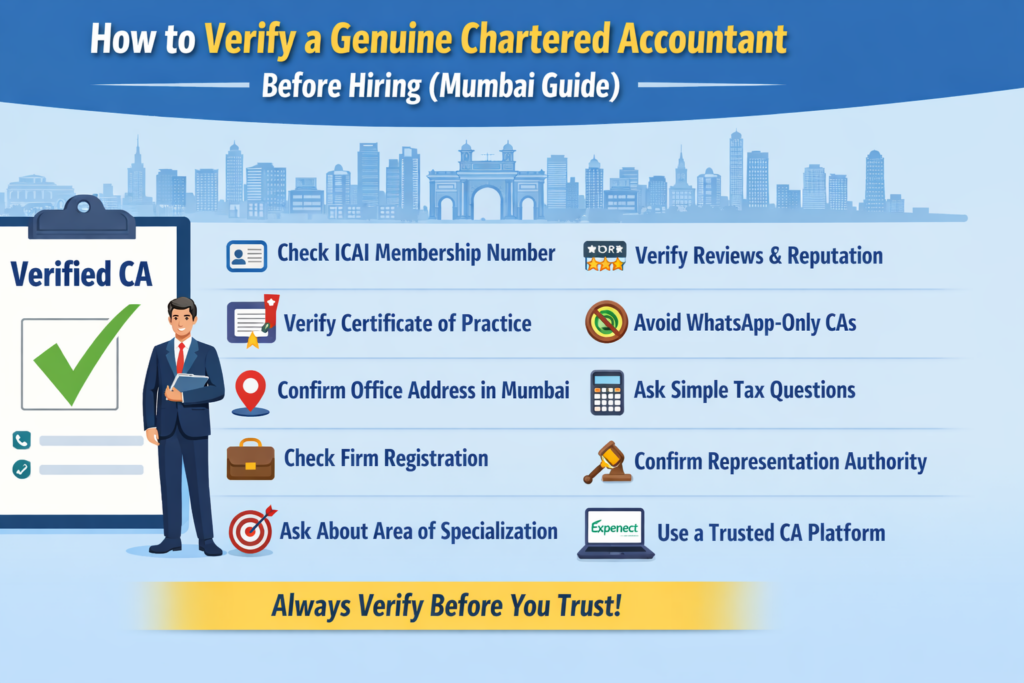
A genuine CA is regulated by the Institute of Chartered Accountants of India (ICAI) and is legally accountable for their work.
1. Check ICAI Membership Number (Most Important Step)
Every genuine Chartered Accountant in India must be registered with ICAI.
What to ask:
- ICAI Membership Number
- Full name as registered with ICAI
How to verify:
- Visit the ICAI “Member Directory”
- Enter the CA’s membership number or name
- Confirm:
- Full name
- Membership status (Active)
- City (Mumbai or nearby)
✔️ If the name does not appear, they are NOT a Chartered Accountant.
🚨 Red flag: Anyone refusing to share their ICAI number.
2. Verify Certificate of Practice (COP)
Not all CAs are allowed to practice independently.
A Certificate of Practice (COP) is mandatory for:
- Filing returns on your behalf
- Representing you before tax authorities
- Signing audit reports
Ask them:
- “Do you have an active Certificate of Practice?”
You can verify the COP status in the ICAI member profile itself.
✔️ Only CAs with active COP can legally provide professional services.
3. Confirm Physical Office Address in Mumbai
A genuine CA usually has:
- A registered office
- A verifiable business address
What to check:
- Office location on Google Maps
- Name board or firm name
- Proper office setup (not just a residential flat posing as an office)
📍 Mumbai tip:
Areas like Andheri, Borivali, Dadar, Lower Parel, Thane, Navi Mumbai have many CA firms — verify location carefully.
4. Check Firm Registration (If It’s a CA Firm)
If you’re hiring a CA firm, verify:
- Firm name registered with ICAI
- Partner details
- Registration number
Many fake agencies use terms like:
- “Tax Consultant”
- “Accounting Expert”
- “Finance Advisor”
⚠️ These titles do not mean Chartered Accountant.
Only ICAI-registered firms can call themselves CA Firms.
5. Ask About Area of Specialization
A genuine CA will be clear and honest about their expertise.
Examples:
- GST compliance & audits
- Income tax for individuals
- Startup & company compliance
- MSME accounting
- International taxation
🚩 Red flag:
- “I handle everything for everyone”
- No clear niche or experience explanation
Mumbai businesses often need industry-specific expertise, not general claims.
6. Check Reviews, Reputation & Client Base
Before hiring a CA in Mumbai:
- Check Google Reviews
- Check LinkedIn profile
- Ask for existing client references
- Look for long-term client relationships
✔️ A genuine CA has:
- Real testimonials
- Consistent professional presence
- Transparent communication
7. Avoid WhatsApp-Only or Cash-Only CAs
Professional CAs follow proper processes.
🚨 Red flags:
- Only WhatsApp communication
- No email, no letterhead
- Cash-only payments
- No invoices or engagement letters
A genuine CA provides:
- Official email ID
- Engagement letter
- Invoice & receipt
- Proper documentation trail
8. Verify Knowledge with Simple Questions
You don’t need to be an expert. Ask basic questions like:
- What returns do I need to file monthly/annually?
- What are the penalties if I miss a deadline?
- What tax-saving options apply to my case?
✔️ A real CA explains clearly.
❌ Fake ones confuse or scare you.
9. Confirm Representation Authority
Only a genuine CA can:
- Represent you before Income Tax Department
- Handle GST notices
- Appear in audits
Ask directly:
“Will you represent me if I receive a notice?”
Their answer will reveal everything.
10. Use a Trusted CA Listing Platform (Safest Option)
The easiest and safest way to hire a genuine CA in Mumbai is to use a verified CA listing platform like Expenect.
Why Expenect?
- ✔️ ICAI-verified Chartered Accountants
- ✔️ Location-based matching (Mumbai specific)
- ✔️ Verified profiles & services
- ✔️ No fake consultants
Instead of gambling with your finances, choose verified professionals.
Final Checklist Before Hiring a CA in Mumbai
✅ ICAI Membership verified
✅ Active Certificate of Practice
✅ Physical office or registered firm
✅ Clear specialization
✅ Transparent fees & documentation
✅ Positive reviews & credibility
Conclusion
Hiring the right Chartered Accountant is not an expense — it’s an investment in your financial safety.
In a city like Mumbai, where compliance mistakes can cost lakhs, verification is non-negotiable.
👉 Always verify before you trust.
👉 Always choose a genuine CA.
👉 Always protect your business & money.
Looking for a Verified CA in Mumbai?
Explore Expenect and connect with trusted, ICAI-verified Chartered Accountants near you.
Understanding GST Notices: What to Do When You Get One
For many MSMEs and startups, receiving a GST notice can be stressful. But the truth is—GST notices are common, and most of them can be resolved easily if you respond correctly and on time.
In 2025, with stricter GST compliance rules, automated scrutiny, and real-time data monitoring, businesses need to understand:
- Why GST notices are issued
- Types of notices
- How to respond
- What not to do
This guide breaks everything down in simple language so you can handle any GST notice confidently.
What Is a GST Notice?
A GST notice is an official communication from the GST department when they identify:
✔ Errors
✔ Mismatches
✔ Delays
✔ Non-payment
✔ Wrong ITC claims
✔ Non-filing of returns
Not all GST notices mean penalties—many are just requests for clarification.
Common Reasons Why Businesses Receive GST Notices
Here are the most frequent triggers:
- Mismatch between GSTR-1 and GSTR-3B
- Claiming wrong input tax credit (ITC)
- Non-filing or late filing of returns
- Incorrect GST rates applied
- Excess invoices generated
- E-way bill discrepancies
- Unusual high refund claims
- Suspicious transactions flagged by the system
Types of GST Notices (2025 Updated List)
1. GST REG-03 — Clarification Required
Issued when: Additional documents or information is needed during registration.
2. GST ASMT-10 — Tax Liability Mismatch
Issued when: There is a mismatch between your returns and actual tax liability.
3. GST CMP-05 — Wrong Composition Scheme Usage
Issued when: You are not eligible for the composition scheme.
4. GST DRC-01 — Demand for Tax, Interest, Penalty
Issued when: Department believes you have short-paid or not paid GST.
5. GST RFD-01 / RFD-08 — Refund Scrutiny
Issued when: Refund application needs additional verification.
6. GST GSTR-3A — Return Non-Filing Notice
Issued when: You failed to file GST returns.
7. GST DRC-07 — Summary of Demand
Issued when: Final demand is initiated after adjudication.
What to Do When You Receive a GST Notice
Step 1: Do NOT Panic — Read the Notice Carefully
GST notices clearly mention:
- Type of notice
- Section of the GST Act
- Reason for issuance
- Required documents
- Deadline to respond
Step 2: Identify the Cause of the Notice
Most GST issues arise from:
- Invoice mismatch
- Late payments
- Wrong ITC claims
- Data entry errors
Understanding the root cause helps avoid future notices.
Step 3: Collect Required Documents
Depending on the notice, you may need:
- Sales invoices
- Purchase bills
- GSTR-1 & GSTR-3B returns
- Ledger reports
- E-way bills
- Bank statements
- Reconciliations
Step 4: Respond Within the Deadline
Most notices require a response within 7 to 30 days.
Missing deadlines can lead to:
❌ Penalties
❌ Interest
❌ Blocking of e-way bill services
❌ Audits
❌ ITC reversal
Step 5: File Corrective Returns (If Required)
If the notice is due to mismatch or error:
- Revise your GSTR-1
- Rectify GSTR-3B
- Pay pending taxes + interest
Step 6: Hire a CA or GST Expert (Highly Recommended)
A professional helps you:
- Avoid penalties
- Prepare proper documentation
- Identify ITC fraud risks
- Respond correctly
- Prevent future notices
Platforms like Expenect make it easy to connect with verified GST consultants.
Common Penalties for GST Non-Compliance (2025)
| Issue | Penalty |
|---|---|
| Late filing | ₹50 per day (₹20 for NIL returns) |
| ITC claimed wrongly | 24% interest + penalty |
| Incorrect GST rate | Tax difference + interest |
| Non-filing of returns | Notices + possible cancellation |
| Non-payment of tax | 18% interest |
How to Avoid GST Notices in the Future
✔ File returns (GSTR-1 & 3B) on time
✔ Reconcile ITC monthly
✔ Maintain clean and correct invoices
✔ Match GSTR-2B before claiming ITC
✔ Ask vendors to file returns on time
✔ Use cloud accounting tools with GST auto-check
✔ Conduct a Quarterly GST Health Checkup
How Expenect Helps You Handle GST Notices
At Expenect, we help MSMEs & startups:
✔ Respond to GST notices professionally
✔ Fix mismatches in GSTR-1 & GSTR-3B
✔ Claim accurate ITC
✔ Maintain GST-compliant books
✔ Avoid penalty risk with monthly compliance dashboards
👉 Connect with verified GST experts on Expenect and resolve your GST notice today.
Conclusion
Receiving a GST notice isn’t the end of the world — but responding on time is crucial.
With proper records, expert guidance, and compliant practices, any GST notice can be handled confidently.
📌 If you’ve received a GST notice, don’t delay.
Get a GST Notice Review & Resolution through Expenect today.

How Virtual CFO Services Help Startups Raise Funding in India

Raising funds is one of the biggest milestones for any startup — but it’s also one of the toughest challenges. Investors today demand financial clarity, compliance, scalability, and governance before investing a single rupee.
This is where Virtual CFO (Chief Financial Officer) services step in.
A Virtual CFO acts as your financial strategist, helping you plan, forecast, and present your business in a way that attracts investors.
In this article, we’ll explore how Virtual CFO services help startups raise funding in India, and why every growing business should consider one in 2025.
✅ What Is a Virtual CFO?
A Virtual CFO is a part-time or outsourced financial expert who provides all the services of a full-time CFO — at a fraction of the cost.
Instead of hiring an in-house CFO for ₹20–40 lakh per year, startups can hire Virtual CFOs who:
- Create financial models
- Manage cash flow
- Ensure compliance and taxation
- Prepare investor decks and due diligence reports
- Guide founders through fundraising negotiations
📊 The Funding Landscape in India (2025)
India’s startup ecosystem continues to grow rapidly — but so does investor scrutiny.
Investors now expect:
- Audited financials and compliance reports
- Clean cap tables and ownership clarity
- Forecasts and break-even analysis
- Governance and financial discipline
Startups that fail to present these professionally often lose funding opportunities, even with great ideas.
That’s why having a Virtual CFO is no longer optional — it’s a competitive advantage.
🚀 6 Ways Virtual CFOs Help Startups Raise Funding
1. Building a Solid Financial Model
Investors don’t invest in ideas — they invest in numbers.
Virtual CFOs create detailed financial projections showing revenue growth, profit margins, and scalability.
They also build investor-friendly unit economics models that demonstrate profitability potential — a key factor in funding rounds.
2. Ensuring Compliance & Clean Books
Due diligence can make or break your funding deal.
Virtual CFOs ensure your business is compliant with:
- GST, TDS, and ROC filings
- Audit requirements
- Cap table & ESOP structuring
Clean, transparent books boost investor confidence and speed up funding approvals.
3. Preparing Investor Pitch Decks with Financial Insights
Investors love data-driven decks.
A Virtual CFO helps founders include realistic numbers — like CAC, LTV, burn rate, runway, and growth forecasts — that show financial maturity and control.
They turn complex numbers into simple, compelling visuals that make your pitch stand out.
4. Valuation and Fundraising Strategy
Determining valuation is tricky — too high, and investors walk away; too low, and you lose equity unnecessarily.
A Virtual CFO helps you:
- Arrive at a fair valuation
- Negotiate term sheets
- Structure funding rounds efficiently
They also advise on debt vs. equity financing, ensuring you don’t dilute ownership prematurely.
5. Investor Reporting and Communication
Post-funding, maintaining investor trust is vital.
Virtual CFOs design monthly and quarterly reports with key financial updates, performance insights, and projections.
This builds long-term relationships and improves the chances of follow-on funding.
6. Strategic Financial Guidance for Growth
A Virtual CFO doesn’t just prepare reports — they guide you strategically.
They help founders make informed decisions on:
- Scaling operations
- Cost optimization
- Product pricing
- Hiring budgets and cash burn
This ensures your startup remains investor-ready throughout its journey.
💼 Benefits of Hiring a Virtual CFO for Startups
| Benefit | Impact on Startup |
|---|---|
| Professional Financial Management | Increases investor confidence |
| Compliance & Governance | Reduces funding delays |
| Smart Valuation | Ensures fair deals |
| Strategic Forecasting | Improves decision-making |
| Cost Efficiency | Saves 70–80% over full-time CFOs |
⚙️ How Expenect Helps Startups Raise Funding
At Expenect, we connect startups with top-tier Virtual CFOs and Chartered Accountants who specialize in fundraising and investor management.
Our Virtual CFO Services include:
✔️ Investor-ready Financial Modelling
✔️ Valuation & Capital Structuring
✔️ Compliance and Tax Management
✔️ Due Diligence & Investor Reporting
Whether you’re preparing for seed, Series A, or beyond — Expenect ensures your business is financially fundable.
👉 Visit Expenect.com to connect with India’s best Virtual CFO experts.
✅ Conclusion
Raising funds isn’t just about storytelling — it’s about financial credibility.
A Virtual CFO gives your startup the structure, compliance, and strategic clarity investors expect.
With a solid financial foundation, clean books, and transparent reporting, you can attract investors faster and close funding rounds with confidence.
📌 Ready to make your startup investor-ready?
Book a Virtual CFO Consultation with Expenect today.

Cloud Accounting Tools for MSMEs: Which One Should You Use in 2025?

In 2025, cloud accounting tools are no longer a luxury—they’re a necessity for MSMEs (Micro, Small & Medium Enterprises) in India. With increasing business complexity, GST & e-invoicing requirements, remote teams, and investor demands for transparency, having the right accounting software can make a huge difference.
But with so many options, how do you choose the right one? This blog walks through the key criteria, highlights some popular tools, and helps you decide which fits your business best.
Why Cloud Accounting Matters for MSMEs
- Anywhere access & collaboration: Cloud tools allow you—or your CA—to access real-time financials from anywhere.
- Automated updates: Tax rules (GST, e-invoicing) change often. Cloud solutions roll in updates automatically.
- Scalability: As you grow the business, add branches, e-commerce channels or overseas clients, cloud tools scale smoothly.
- Cost efficiency: No heavy hardware investment; subscription models help budgeting.
- Better compliance: Many tools integrate GST modules, e-invoicing, TDS, etc, reducing risk of errors.
✅ Key Features to Evaluate in 2025
Here are what you should check—your checklist when comparing tools:
| Feature | Why It Matters |
|---|---|
| GST & e-Invoicing support | Compliance requirement for many MSMEs; avoids last-minute issues. |
| Bank feed & auto reconciliation | Saves time, improves accuracy, and eases tax/audit prep. |
| Dashboard & real‐time reports | Helps you monitor business health, cash flow, and profitability. |
| Inventory/branch support (if applicable) | For trading/trading + manufacturing businesses, inventory is a big part. |
| Multi-user access & CA collaboration | Your CA should be able to access or review your data easily. |
| Mobile app / remote access | For founders on the move or businesses with remote teams. |
| Cost / subscription model | Ensure pricing fits your budget—check add-ons & hidden costs. |
| Security & backups | Critical for protecting financial data and business continuity. |
🔝 Top Cloud Accounting Tools for MSMEs in India
Here are some popular tools worth considering:
- Ankpal – Cloud accounting software built for small & medium businesses, with features like invoices, TDS/TCS reporting, inventory support.
- Vyapar App – Mobile-first accounting and billing tool popular among small shops and traders, especially useful if you’re on the move.
- Busy 21 Basic – Strong for businesses with inventory and multiple locations; good automation for billing and GST.
Note: These are just examples. You may want to also consider larger tools like Zoho Books and TallyPrime (cloud versions) depending on your needs.
🤔 How to Pick Based on Your Business Size & Needs
- Solo founder / small service business: Low volume, simple invoices → a lightweight mobile/cloud tool like Vyapar works.
- Growing MSME with inventory, multi-location branches: Choose a tool with inventory & branch support (Busy, Ankpal or equivalent).
- Startups planning scale/funding: Go for cloud tool + CA integration + audit-ready reporting (Zoho Books/others) so your financials are clean for investors.
- Compliance heavy business (GST, e-commerce): Ensure the tool supports GST, e-invoicing, TCS, and integrates with your e-commerce/marketplace. Reddit users highlight this need.
💡 Tips to Maximize Value
- Choose one tool and stick to it rather than switching frequently—data migration is painful.
- Get your CA involved in the selection and rollout—it ensures compatibility with your financial processes.
- Train your team and use the dashboards—don’t just let the software sit idle.
- Periodically review if the tool still meets your business needs; upgrade if needed.
- Ensure backups, roles & access controls are set up from day one.
Conclusion
In 2025, picking the right cloud accounting tool is a strategic decision—not just a “software purchase”. It impacts your daily operations, compliance, financial clarity, and ability to scale.
If you’re an MSME or startup looking to implement cloud accounting (or review your current setup), leveraging an expert CA for guidance is smart. At Expenect, we assist businesses in selecting and setting up the right tools, integrating with your CA workflows, ensuring your books are audit-ready and compliant.
👉 Want help selecting or implementing the right cloud accounting tool for your business? Talk to us at Expenect today.

The True Cost of Non-Compliance: Penalties Every Business Owner Should Know

Non-compliance can cost your business more than just money. Learn about the real financial and legal penalties Indian business owners face in 2025 for missing GST, ROC, TDS, and PF filings — and how to avoid them.
Running a business in India comes with several compliance responsibilities — from GST returns to TDS filings, ROC submissions, and labour law obligations.
While many MSMEs and startups focus heavily on growth, non-compliance often takes a backseat — until a notice arrives. The reality? Even a small delay or missed filing can result in hefty penalties, legal risks, and reputation damage.
In this article, we’ll uncover the true cost of non-compliance in 2025 and how timely financial management can protect your business.
✅ What is Non-Compliance?
Non-compliance refers to the failure to meet legal or regulatory obligations imposed by the government.
For businesses, it includes:
- Missing GST or TDS filing deadlines
- Not conducting mandatory audits
- Skipping annual ROC filings
- Failing to deposit PF/ESIC contributions
- Ignoring company law formalities
These oversights may seem minor but can result in financial penalties, interest charges, and even criminal prosecution in serious cases.
📊 Common Areas of Non-Compliance and Their Penalties
Let’s explore the most frequent compliance lapses faced by Indian businesses and their associated costs in 2025:
1. GST (Goods and Services Tax)
- Late filing fee: ₹50 per day (₹20 for NIL returns), capped at ₹5,000.
- Interest on late payment: 18% per annum on outstanding tax.
- Wrong ITC claims: Can lead to penalties up to 100% of the tax amount.
🔹 Example: Missing multiple monthly GST filings can attract notices and block your e-way bill generation.
2. TDS (Tax Deducted at Source)
- Late deposit penalty: 1.5% interest per month until payment.
- Failure to file TDS returns: ₹200 per day until filing.
- Wrong or missing PAN details: ₹10,000 per incorrect entry.
🔹 Example: If TDS is deducted but not deposited, it can lead to prosecution under the Income Tax Act.
3. ROC (Registrar of Companies) Compliance
Every company must file annual returns and financial statements with the Ministry of Corporate Affairs (MCA).
- Late filing penalty: ₹100 per day of delay per form.
- Non-filing for years: Can lead to the company being struck off.
🔹 Example: Thousands of companies were deregistered in 2024 for failing to file Form AOC-4 and MGT-7.
4. PF (Provident Fund) & ESIC
- Late deposit of PF: 12% interest + 5%–25% damages (depending on delay).
- Non-registration: Can attract prosecution under the EPF Act.
🔹 Example: Repeated non-payment of PF can lead to attachment of bank accounts or imprisonment of the employer.
5. Income Tax Filings
- Late filing fee: Up to ₹10,000 under Section 234F.
- Interest: 1% per month under Section 234A/B/C.
- Scrutiny or reassessment: May lead to tax demand, penalties, and litigation.
🔹 Example: Even if no tax is payable, missing the ITR deadline affects your ability to claim refunds or carry forward losses.
💣 The Hidden Costs of Non-Compliance
Beyond fines and penalties, non-compliance has long-term business consequences that most owners overlook:
- ❌ Loss of credibility with investors and lenders.
- ❌ Difficulty securing loans or funding due to irregular filings.
- ❌ Legal scrutiny and increased audit risk.
- ❌ Operational disruptions due to blocked GST numbers or ROC issues.
In short, the real cost of non-compliance isn’t just monetary — it’s strategic and reputational.
💼 How to Stay Compliant (Without the Stress)
Staying compliant doesn’t have to be overwhelming. Here’s how smart businesses manage it:
- Hire a professional CA or compliance consultant.
- Use cloud accounting tools for automated reminders and filing.
- Schedule quarterly compliance reviews.
- Get a Business Health Checkup to identify risks early.
🚀 How Expenect Can Help
At Expenect, we help startups and MSMEs stay 100% compliant through verified CAs and financial experts.
Our services include:
✔️ GST & TDS filing and reconciliation
✔️ ROC & Income Tax compliance
✔️ Payroll, PF & ESIC management
✔️ Business Health & Tax Checkup services
👉 Stay penalty-free with Expenect. Visit Expenect.com and connect with a verified CA today.
✅ Conclusion
In 2025, compliance isn’t just a formality — it’s your business’s foundation of trust and stability.
By staying updated and partnering with experts, you can save money, avoid penalties, and focus on what really matters — growth.
📌 Don’t wait for a notice — book your Compliance Health Checkup with Expenect today.

What Investors Look for in a Financial Due Diligence Report

In 2025, investor funding is more competitive than ever — and a great pitch deck isn’t enough anymore.
Before writing a cheque, every serious investor performs Financial Due Diligence (FDD) — a detailed investigation into your company’s financial health, compliance, and sustainability.
For startups and MSMEs, a Financial Due Diligence Report acts as a credibility document — a transparent snapshot of where your business stands today and where it’s headed tomorrow.
In this blog, let’s explore what investors really look for in an FDD report and how to prepare your business to pass due diligence confidently.
✅ What is Financial Due Diligence?
A Financial Due Diligence (FDD) is an independent review of your company’s financial records, tax filings, and performance metrics conducted before any major investment or acquisition.
Its purpose is simple:
To ensure that the numbers you’ve shared with investors match reality and to identify potential risks or opportunities before they invest.
Typically, an FDD includes:
- Verification of financial statements
- Review of revenue, expenses, and profitability
- Analysis of liabilities and debt
- Compliance and tax checks
- Forecasting and valuation analysis
7 Things Investors Look for in a Financial Due Diligence Report
1. Accuracy of Financial Statements
Investors start with the basics — are your financial statements clean and accurate?
They review your Balance Sheet, Profit & Loss Statement, and Cash Flow to ensure transparency and consistency.
🔹 Tip: Reconcile your accounts monthly and have your books reviewed by a Chartered Accountant before fundraising.
2. Revenue Quality & Predictability
Not all revenue is equal. Investors analyze:
- Whether your income is recurring or one-time,
- Your top customers and dependency on them,
- And how sustainable your growth really is.
🔹 Tip: Build recurring revenue streams such as subscriptions or long-term contracts.
3. Profitability & Margins
High revenue with low margins often signals inefficiency. Investors assess your gross and net margins, EBITDA, and cost structures.
🔹 Tip: Track KPIs like Customer Acquisition Cost (CAC) and Lifetime Value (LTV) to prove profitability potential.
4. Cash Flow Health
Cash flow tells the truth about your business.
Investors check if your cash inflows are consistent and whether your company can sustain itself without constant fundraising.
🔹 Tip: Maintain a positive working capital cycle and keep 6–12 months of runway.
5. Compliance & Legal Health
Investors hate surprises. Any pending legal or compliance issues can delay or cancel deals. They look for:
- Timely GST, TDS, and ROC filings
- Updated employee PF/ESIC compliance
- Tax returns for the past three years
🔹 Tip: Get a Compliance Audit before entering funding discussions.
6. Liabilities & Debt Structure
Every investor checks your financial obligations to ensure they won’t inherit unwanted risk. They analyze:
- Existing loans, credit lines, or vendor dues
- Contingent liabilities and guarantees
- Any pending litigation or disputes
🔹 Tip: Maintain a transparent debt disclosure and repayment plan.
7. Future Financial Projections & Scalability
A great past means little without a realistic future.
Investors review your financial forecasts, business model, and scalability potential.
🔹 Tip: Base your projections on market data and make assumptions transparent.
Why a Clean Due Diligence Report Matters
- ✅ Builds investor confidence — Shows transparency and governance
- ✅ Speeds up funding — Reduces negotiation time and paperwork
- ✅ Improves valuation — Strong numbers justify better deals
- ✅ Helps internal decisions — You get clarity on your company’s true financial health
How Expenect Helps Businesses Become Investor-Ready
At Expenect, we help startups and MSMEs prepare investor-ready Financial Due Diligence Reports.
Our verified Chartered Accountants analyze, review, and present your financials in a format that investors trust.
Our Due Diligence Services Include:
✔️ Financial & compliance audit
✔️ Tax health checkup
✔️ Business valuation & forecasting
✔️ Investor reporting & CFO advisory
Whether you’re raising seed funding or preparing for Series A, Expenect ensures your business passes every financial test.
Visit Expenect.com to connect with top CAs and experts today.
✅ Conclusion
Raising capital isn’t just about the idea — it’s about trust.
A comprehensive Financial Due Diligence Report helps investors see your business as credible, compliant, and investment-worthy.
By preparing early, maintaining transparent records, and working with professionals, you can make your funding journey faster and smoother.
📌 Ready to impress your next investor?
Book a Financial Due Diligence Consultation today with Expenect.
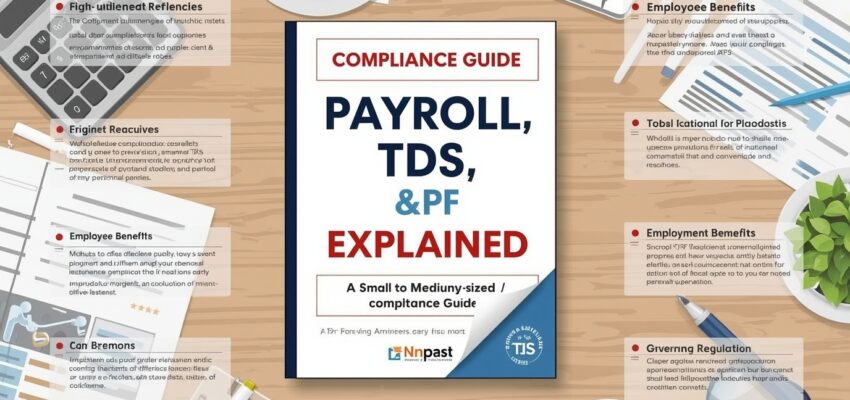
Payroll, TDS, and PF Explained: A Complete Compliance Guide for SMEs
For SMEs (Small and Medium Enterprises) in India, managing compliance is just as important as managing customers. Among the most critical responsibilities are Payroll, TDS (Tax Deducted at Source), and PF (Provident Fund).
While these terms often sound complex, they are crucial for:
✔️ Building employee trust
✔️ Avoiding government penalties
✔️ Ensuring financial discipline
In this blog, we’ll break down Payroll, TDS, and PF compliance—and explain how SMEs can handle them effectively in 2025.
✅ What is Payroll?
Payroll is the process of managing employee salaries, wages, bonuses, deductions, and net pay.
It includes:
- Gross Salary (basic pay, allowances, incentives)
- Deductions (TDS, PF, professional tax, etc.)
- Net Salary (take-home pay after deductions)
Why Payroll Compliance Matters:
- Ensures employees are paid accurately and on time
- Maintains transparency in financial reporting
- Builds credibility with employees and investors
🔹 Tip for SMEs: Use payroll software or outsource payroll processing to a CA/consultant to save time and avoid errors.
✅ What is TDS (Tax Deducted at Source)?
TDS is the income tax deducted by the employer on behalf of employees before salary is credited.
Key Points for Employers (SMEs):
- Deduct TDS if annual income exceeds the basic exemption limit (₹2.5 lakh as per current rules).
- Deposit TDS with the government by the 7th of the following month.
- File quarterly TDS returns (Form 24Q).
- Issue Form 16 to employees annually for their tax filing.
Why TDS Compliance is Important:
- Helps employees avoid tax burden at year-end
- Prevents penalties and legal notices for SMEs
- Creates trust with stakeholders
🔹 Tip for SMEs: Keep employee investment declarations updated to deduct the right TDS.
✅ What is PF (Provident Fund)?
The Employees’ Provident Fund (EPF) is a retirement savings scheme managed by the Employees’ Provident Fund Organisation (EPFO).
Applicability for SMEs:
- Mandatory for companies with 20 or more employees
- Both employer and employee contribute 12% of basic salary each month
- Employer’s share is split into:
- 8.33% → Pension Scheme
- 3.67% → Provident Fund
Why PF Compliance Matters:
- Provides financial security to employees
- Enhances employer brand and retention
- Non-compliance attracts penalties and damages
🔹 Tip for SMEs: Even if not mandatory, voluntarily offering PF builds employee goodwill.
📊 Payroll, TDS, and PF: Compliance Checklist for SMEs in 2025
| Compliance Area | Employer Responsibility | Due Dates |
|---|---|---|
| Payroll | Calculate gross salary, apply deductions, disburse net salary | Monthly (salary day) |
| TDS | Deduct tax at source, deposit with govt, file returns | Deposit: 7th of next month; Returns: Quarterly |
| PF | Deduct 12% from employee salary + match employer contribution | 15th of next month |
🚀 Challenges SMEs Face in Payroll, TDS & PF
- Manual errors in salary calculation
- Delayed compliance filings due to lack of awareness
- Cash flow mismatches while depositing contributions
- Changing rules & frequent government updates
💼 How Expenect Helps SMEs
At Expenect, we simplify compliance for growing businesses by offering:
✔️ End-to-end Payroll Management
✔️ TDS Calculation, Filing & Form 16 support
✔️ PF Registration & Compliance
✔️ Advisory services to keep your SME penalty-free
👉 With Expenect, SMEs get peace of mind while focusing on growth.
✅ Conclusion
For SMEs, Payroll, TDS, and PF aren’t just compliance checkboxes—they are building blocks of financial discipline and employee satisfaction. By staying updated and seeking expert support, businesses can save time, avoid penalties, and build a reputation as a reliable employer.
📌 Want to make compliance stress-free?
👉 Connect with verified CAs and consultants on Expenect.com today.

Top 7 Financial Mistakes First-Time Founders Make (And How to Avoid Them)

Starting up is exciting—but for first-time founders, the biggest challenge isn’t always building the product. It’s managing the money.
Many entrepreneurs focus on sales, growth, and marketing while overlooking financial planning, compliance, and cash flow. These mistakes can cost founders not just profits—but also credibility with investors and lenders.
In this blog, we’ll highlight the top 7 financial mistakes first-time founders make and share expert advice on how to avoid them in 2025.
✅ Mistake 1: Mixing Personal and Business Finances
Many founders use a single bank account for both business and personal expenses. This creates confusion during audits, tax filings, and fundraising.
How to Avoid It:
- Open a separate business current account.
- Pay yourself a defined salary or withdrawal.
- Maintain clean books of accounts.
✅ Mistake 2: Ignoring Compliance and Tax Filings
Delaying GST, TDS, or MCA filings leads to penalties and interest. Non-compliance also scares away investors during due diligence.
How to Avoid It:
- Hire a CA or Virtual CFO to stay on top of deadlines.
- Use accounting software for automated reminders.
- File returns on time—even if there’s no revenue.
✅ Mistake 3: No Financial Forecasting
Running a startup without forecasting is like sailing without a compass. Founders often underestimate expenses and overestimate revenues.
How to Avoid It:
- Prepare cash flow statements and financial models.
- Revisit projections every 3–6 months.
- Use forecasting tools or consult experts.
✅ Mistake 4: Mismanaging Cash Flow
Revenue ≠ Cash. Many startups fail because they run out of cash even when sales look strong.
How to Avoid It:
- Monitor burn rate and runway regularly.
- Negotiate better payment terms with clients/vendors.
- Keep at least 6 months of reserves for emergencies.
✅ Mistake 5: Overlooking Funding & Valuation Basics
Founders often raise funds at unrealistic valuations or give away too much equity early. This affects control and future funding rounds.
How to Avoid It:
- Understand pre-money and post-money valuation.
- Maintain a clean cap table.
- Consult with CAs and legal advisors before signing term sheets.
✅ Mistake 6: Not Planning for Taxes
First-time founders often ignore advance tax, GST credits, or deductions they are eligible for, ending up paying higher taxes.
How to Avoid It:
- Plan taxes quarterly, not just at year-end.
- Explore deductions for R&D, depreciation, and startup incentives.
- Register with DPIIT Startup India for tax benefits.
✅ Mistake 7: Avoiding Professional Help
Many entrepreneurs think they can “Google” everything. But financial missteps early on can lead to long-term damage.
How to Avoid It:
- Work with professional CAs, Virtual CFOs, or advisory firms.
- Outsource compliance if hiring in-house isn’t possible.
- Consider platforms like Expenect to connect with verified experts.
🚀 Conclusion
First-time founders often underestimate the importance of financial discipline. Avoiding these 7 mistakes will not only save money but also build a strong foundation for growth, funding, and eventual exit.
At Expenect, we help startups with compliance, tax planning, financial strategy, and Virtual CFO services—so founders can focus on building, while we handle the numbers.

Business Health Checkup: Why Every MSME Needs One in 2025

Just like individuals go for regular medical checkups to maintain good health, businesses too need regular financial and operational checkups. For MSMEs (Micro, Small, and Medium Enterprises), a Business Health Checkup in 2025 is no longer optional—it’s essential for survival and growth.
A Business Health Checkup is a structured financial and compliance assessment conducted by Chartered Accountants (CAs) and business consultants. It gives business owners a clear report card on where their enterprise stands today—and what needs to improve for tomorrow.
✅ What is a Business Health Checkup?
A Business Health Checkup is a diagnostic service designed for MSMEs and startups to:
- Review financial statements (P&L, balance sheet, cash flow).
- Check tax compliance (GST, TDS, income tax).
- Assess business processes and internal controls.
- Identify profitability gaps and cash flow risks.
- Suggest strategic improvements for growth.
Think of it as a comprehensive financial health report prepared by experts.
📊 Why MSMEs Need a Business Health Checkup in 2025
1. To Stay Compliant with Evolving Regulations
GST, TDS, and MCA compliances have become stricter. Missing deadlines can attract penalties. A checkup ensures your filings are up-to-date.
2. To Improve Profitability
Many MSMEs struggle with low margins. A CA-led checkup identifies cost leaks, pricing issues, and areas where profitability can be improved.
3. To Access Loans and Funding
Banks, NBFCs, and investors demand financial clarity. A Business Health Checkup gives you a ready-to-share report for funding approvals.
4. To Prepare for Growth & Expansion
Scaling a business without financial planning is risky. A checkup highlights areas to strengthen before expansion.
5. To Benchmark Against Industry Standards
You’ll know where your MSME stands compared to competitors, and what improvements are needed to compete better.
🛠️ What Does a Business Health Checkup Cover?
- ✅ Accounting Review – accuracy of books, reconciliations.
- ✅ Tax Compliance – GST returns, TDS deductions, income tax filings.
- ✅ Financial Ratios Analysis – liquidity, profitability, solvency.
- ✅ Cash Flow Management – inflows vs. outflows.
- ✅ Business Advisory – cost-cutting, process automation, and risk reduction.
📅 How Often Should You Do It?
For MSMEs in 2025, it’s recommended to conduct a Business Health Checkup once every 6–12 months. This keeps compliance updated and ensures timely corrective action.
🚀 Benefits of a Business Health Checkup for MSMEs
- Early Detection of Issues: Identify risks before they become problems.
- Tax Savings: Optimize tax liability through better planning.
- Better Decision-Making: Rely on data-driven insights instead of guesswork.
- Investor Confidence: Build trust with clean and transparent financials.
- Long-Term Growth: Create a roadmap to scale profitably.
💼 How Expenect Helps MSMEs
At Expenect, we specialize in offering Business Health Checkups designed for Indian MSMEs and startups. Our verified CAs and consultants provide:
✔️ Comprehensive financial health reports
✔️ Compliance and tax checkups
✔️ Profitability and growth advisory
✔️ Virtual CFO services for long-term success
👉 With Expenect, you don’t just get a checkup—you get a growth plan for your business.
✅ Conclusion
In 2025, running an MSME without a Business Health Checkup is like driving without a dashboard—you won’t know when things go wrong until it’s too late. By scheduling regular checkups, you can ensure compliance, improve profitability, and position your business for growth.
📌 Ready to get your MSME’s Business Health Checkup?
👉 Visit Expenect.com and book your consultation today.

One Person Company (OPC) vs. Private Limited in 2025: Which is Right for You?
One Person Company (OPC) vs. Private Limited in 2025: Which is Right for You?

Choosing the right business structure is one of the most critical decisions for any entrepreneur in India. In 2025, with evolving compliance norms, tax benefits, and startup-friendly policies, founders often find themselves comparing One Person Company (OPC) vs. Private Limited Company (Pvt Ltd). Both offer limited liability protection and legal recognition, but they differ significantly in flexibility, compliance, and scalability.
In this guide, we’ll break down the differences, advantages, and disadvantages of OPC and Private Limited companies to help you decide which structure best fits your entrepreneurial journey.
What is a One Person Company (OPC)?
An OPC is a company that allows a single entrepreneur to enjoy the benefits of a corporate entity. It was introduced under the Companies Act, 2013 to support solo founders.
Key Features:
- Can be formed with just 1 director and 1 member
- Limited liability protection
- Less compliance burden than Pvt Ltd
- Cannot be converted into a Section 8 (non-profit) company
- Ideal for solo entrepreneurs, consultants, and freelancers
What is a Private Limited Company (Pvt Ltd)?
A Private Limited Company is the most popular structure for startups and growing businesses in India.
Key Features:
- Requires a minimum of 2 directors and 2 shareholders
- Limited liability protection
- Separate legal entity status
- Can raise funding from venture capitalists and angel investors
- Higher compliance but greater scalability
OPC vs. Private Limited: A 2025 Comparison
| Criteria | One Person Company (OPC) | Private Limited Company (Pvt Ltd) |
|---|---|---|
| Number of Members | 1 | Minimum 2, Maximum 200 |
| Directors Required | 1 | Minimum 2 |
| Compliance | Moderate | Higher (ROC filings, board meetings, etc.) |
| Funding | Limited (cannot issue shares to investors) | Easy to raise equity funding |
| Scalability | Restricted | Highly scalable |
| Taxation (2025) | Taxed like Pvt Ltd at 22% (domestic companies) | Taxed at 22% (domestic companies) |
| Conversion | Can convert into Pvt Ltd after meeting conditions | No need for conversion |
| Best For | Solo founders, consultants, small businesses | Startups, SMEs, investor-backed companies |
OPC vs. Private Limited: Pros & Cons
✅ Benefits of OPC
- Simple to set up
- Lower compliance compared to Pvt Ltd
- Best for solo entrepreneurs who don’t need external funding
❌ Limitations of OPC
- Cannot raise venture capital or issue ESOPs
- Growth restrictions beyond a certain turnover
- Only one shareholder allowed
✅ Benefits of Private Limited
- Attracts investors and venture capitalists
- Allows ESOPs for employees
- Better brand credibility
- Scalable structure for expansion
❌ Limitations of Private Limited
- More compliance and reporting
- Higher costs of setup and maintenance
Which Should You Choose in 2025?
- Choose OPC if:
You’re a solo entrepreneur, freelancer, or professional who wants limited liability without complex compliance. - Choose Private Limited if:
You’re planning to raise funding, issue ESOPs, or scale your business with multiple partners.
👉 In short, OPC is great for starting small, while a Pvt Ltd company is the go-to choice for scaling big in 2025.
Conclusion
Both OPC and Private Limited Companies offer legal recognition and liability protection. However, your choice depends on whether you want to stay solo or build a scalable, investor-friendly business.
At Expenect, we help founders choose the right structure, handle compliance, and stay tax-efficient in 2025. Whether you want to incorporate an OPC or a Private Limited Company, our team of experts ensures a hassle-free setup.